Sunday, 20 December 2015

In search of Gaelic - Glasgow


I would love to have the time and resources to devote to a full-time course at Sabhal Mòr Ostaig, but my job in London and my wee dog Dougal put paid to that. Fortunately, living simply in an Airstream trailer means that I only have to work 50%, and as I work in the travel industry I can do a ton of extra shifts during the holiday seasons, then take extra time off during term time.

That is exactly what I did this autumn. I took time off which meant I only needed to go back to London every fortnight, giving me four clear runs of 10 days in Glasgow. Commuting was done on the Caledonian Sleeper, and what a wonderful way to travel that is:


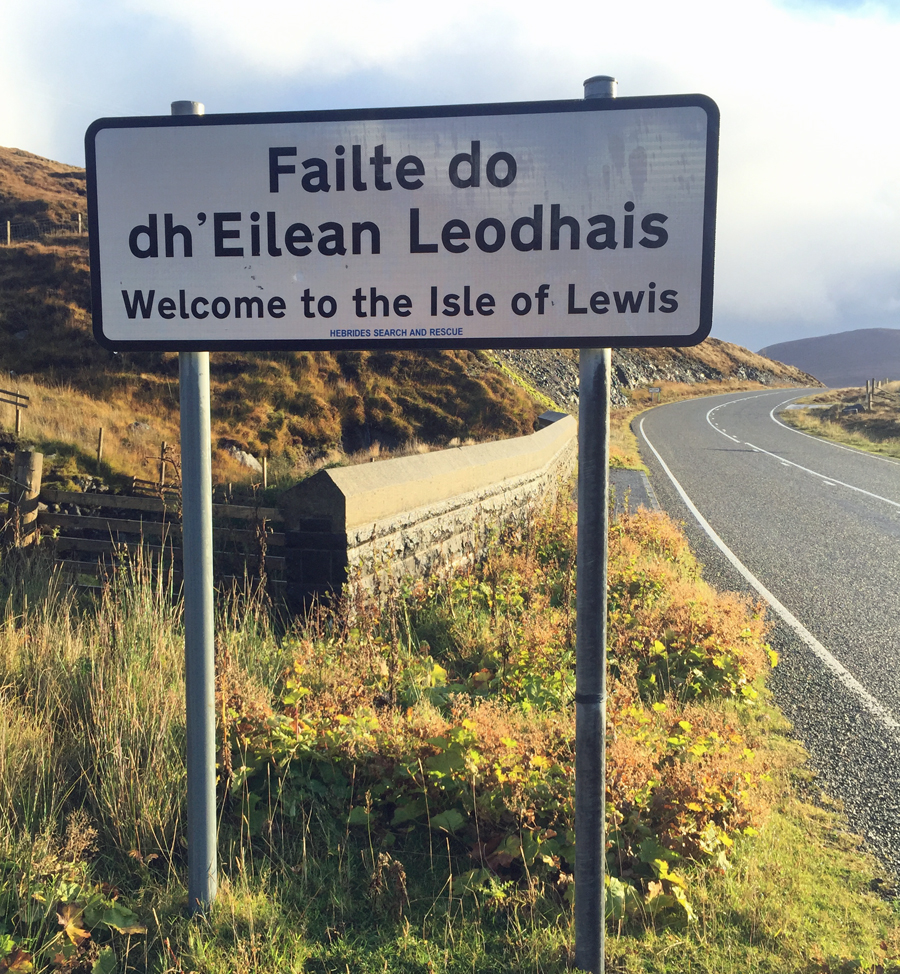
On the first set of days off, I headed on up to the Isle of Lewis in search of Gaelic (see earlier blog entry), then on the next three blocks I stayed in the city itself.

What a brilliant time I had. It is fair to say that if you have the time, and the devotion, you can find a stack of Gaelic in the city.

If you look at the Gaelic Map of Glasgow, you'll see that there are opportunities galore for structured learning, but not so many 'drop in' sessions of the kind I was looking for.

A great place to start when looking for more informal Gaelic events is the An Lòchran website (click on the name) where you can find a list of events coming up. Be warned that many events are only listed a week or so before they take place, so keep checking back. 

I hit jackpot as soon as I landed in Glasgow, as there was a stack of events going on.

First off was the Gaelic music session at the Lios Mòr (Lismore) pub in Partick on the first Wednesday of the month. I went along and for the first hour enjoyed the music but didn't really know anybody. However, Calum (of Beag Air Bheag fame) introduced himself to me and we had a good chat for half an hour in Gaelic, then I met a really nice guy MB who was also a more advanced learner, and we chatted for the rest of the night. It was a brilliant evening. I guess, though, like any pub night, you will have some nights that are quiet and others that are terrific.
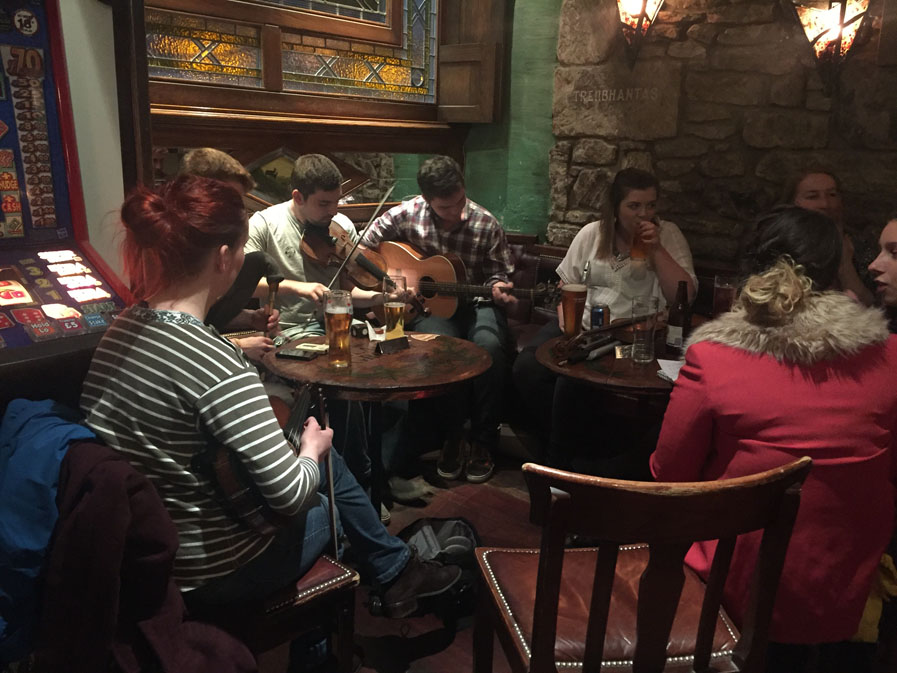


Two nights later on the Friday night I was in the basement of the Argyll Hotel on Sauchiehall Street at Àdamh O' Broin's event, the An Gealbhan social. The night I went was a quiet night and my Gaelic wasn't quite up to the fluency of the others there, but it was a fun and interesting evening.


Next day, by pure luck, the Irish/Scottish group Gaels Le Cheile put on a day of language classes, aimed mainly at those looking to learn Irish Gaelic but also with sessions for those of us looking to improve our Scottish Gaelic. As such, I spent a fantastic day with the brilliant Joy Dunlop, going through a ton of pronounciation exercises and other really useful stuff. The event was, sadly, under-subscribed but I wonder if that's because there wasn't a huge amount of advance notice given. I would seriously take a day off work and make the trek from Dover to Glasgow for another session like that.

Finally, the following Wednesday, I made the journey back to Partick for the lunchtime session at the Gaelic Bookshop (An Lèanag) with Inbhich gu Fileanteas, a structured two hour weekly session for those looking to improve their Gaelic fluency. It was a super crowd and I was made to feel warmly welcome. The two hour session is led by two separate fluent Gaelic speakers and it was a really worthwhile experience; so much so that I shall be heading back hopefully once every month or two just to catch up with them all as work and finances allow.


Let's not forget that there are plenty of other opportunities in Glasgow to put your Gaelic skills to test, whether it is craic at the Park Bar or one of the many other formal learning events that take place through the university or through An Lòchran.


Sadly, the combination of migraine attacks and needing to go to work at weekends curtailed my activities and I didn't get to as many events as I had originally planned. But I have to say, if you're looking for somewhere to go and practice your Gaelic and you are prepared to 'put yourself out there', Glasgow is definitely the place. 


Wednesday, 16 December 2015

Beag Air Bheag - The Broadcast


So... following on from the entry about 'Learner of the Week',  the interview itself has now been broadcast! Don't worry if you missed it, here are a few links for you:

To play the entire programme (Series 3, Programme 9) click on this line here. The interview on the finished programme is split into three parts, and you can hear this at 01:54, at 18:18, and at 52:12. This link and timings are correct until 10/1/16.

Or you can download the podcast by selecting Series 3 Programme 9 from the page clicking this line here. Interview timings may change as the music gets cut from the podcast.

Or, if you're REALLY REALLY bored, you can listen to the entire 26 minutes of interview (which was not broadcast in full due to time constraints) by clicking on this line. 

Needless to say, when it was broadcast on Sunday night I was very, very excited and more than a little bit nervous.

It is at this point I digress to mention a bit of TV work some friends of mine did. They were approached by a downmarket TV company and asked if they could be filmed to make a programme about caravanning. Some of my friends agreed, thinking it would help promote a pastime that they enjoyed.

What happened? About 20 hours of footage was edited to a preconceived agenda and it portrayed everyone in a really, really, bad light. If they said 98% good things and 2% daft things, the 98% of good was edited out, and the 2% daft was left in, to sensationalise the subject and portray the people involved in a negative light. Exactly the same footage could have been edited to produce a completely different portrayal. It was trash television at its worst.


My interview with Iain for Beag Air Bheag lasted about 35 minutes. Again, this could have been edited one of two ways for the 10-15 minutes that was finally broadcast. A cheap sensationalist who wanted to make me look stupid could have taken out all the good bits and left in all the pauses, stutters, and mistakes.

However, I was absolutely delighted (and more than a touch relieved) that the interview had been edited as kindly and as sympathetically as possible, editing out some of the massive clangers and stutters, and leaving in the bits that make me sound like I actually know what I'm talking about. If you listen to the full 26 minute interview, you'll hear that I'm nowhere near as fluent and correct as the 'final cut'.

*****

It wasn't just Beag Air Bheag and the lovely people on the team there that helped pull me out from being down in the dumps where I had previously spent a couple of self-pitying weeks, not feeling the love for Gaelic.

I really thought that the last entry ('What goes Up...') would attract a couple of comments such as 'Oh stop moaning you self-pitying whingebag!' but there was nothing of the sort. All there was in response was kindness, support, and - sadly - thanks from other learners. It seems that 'bad days' affect most learners and the fact that nobody else seems to undertand can make us feel a wee bit alone and isolated.

I guess part of the challenge is that many Gaelic learners are learning remotely by distance learning. As such, there does not seem to be anywhere to turn for support when the going gets tough. This can especially be a problem for those whose friends and family do not support their Gaelic endeavours. I think there is another blog entry to be made about this at some point in the future.

But right now I am still basking in the warm glow of being part of a great radio programme which I cannot rate highly enough. Resources for 'upper intermediate/advanced' learners are scarce, and Beag Air Bheag is a terrific and much-needed asset.

If you fancy playing a part in the programme, you'll be treated with kindness and respect, and the experience is one of the best things that will happen to you on your Gaelic journey. Iain, Fiona, and Calum who work on the programme are absolute stars. Without Gaelic, I would never have met them. Just think about that for a minute. Without Gaelic I would never have met these and many other lovely, lovely people. If that isn't reason enough to enroll on An Cùrsa Inntrigidh at Sabhal Mòr Ostaig right here and now if you're not already learning Gaelic, I don't know what is. 


Tuesday, 8 December 2015

What goes up...


What goes up, must come down. Sunshine follows the rain. Night follows day.

For some reason, media and society seem to expect a 'constant' from us human beings, and we end up beating ourselves up if we're not always on top form. Lunch is for wimps. Feeling below par? Take a pill and be happy and productive. Unhappiness is an avoidable state.

Me, I don't subscribe to this 'always up' culture that we are pressured into believing is real.

There probably are people out there who can bumble along in a constant state of industriousness and discipline. I, my friends, am not one of them.

We all know that the best way to learn something, Gaelic included, is to go for the 'slow burn' and do a little bit every day, learning just one new word or phrase a day, and keeping refreshed on what we already know.

For some reason though, and I'm sure I'm not alone in this, my Gaelic learning seems to follow an intense 'crash and burn' cycle. Crash, burn, repeat.

Over the summer period this year I had plenty of time to devote to Gaelic revision. I basically re-sat my entire course from the previous academic year in my own time, hiding myself away for days on end and immersing myself in the Gaelic.

Then, come September, I simply stopped. It's a bit like that Forrest Gump scene from the film where he runs and runs and runs and runs and then one day, he just stops. After weeks of running, he suddenly doesn't want to run any more.

My ever-patient and understanding Study Buddy MR gave me some space, I did the minimum possible to keep my head above water in the new term of college, and slowly the momentum returned.

This time, the carrot dangling afore me was the interview for Beag Air Bheag that I did a few weeks ago. As the interview approached, the urgency to become as fluent as possible grew at an alarming pace, and by the end of October I once again had all my trotters in the trough and even started to dream in Gaelic. 

Then, after the interview, the music stopped. I didn't want to hear Gaelic or speak it for a while. Irritations and setbacks that I had previously managed to ignore or laugh off started to irk and cripple me.  Meanwhile, some charming young lad left a comment to a video I'd posted online proffering '...your attempt at Gaelic is actually insulting!' Curiously enough, he answered my Gaelic response in English.

I even contemplated the thought of jacking it all in. I'd had enough of being looked down on, people turning their backs to me, and being treated as very much an outsider. And people I thought would be supportive turned out to be anything but.

Fortunately, my true friends MR in London, CF in Dundee, and RK Inverness offered their empathy and support and have gently nudged and cajoled me back into action. 

For others who go through similar cycles, the important thing to remember when you are not 'feeling the love' is to be your own best friend. Don't be too hard on yourself, be kind to yourself, allow yourself a wee break, and don't feel pressured into doing anything. If, after a couple of weeks has elapsed, there is no improvement, you then do what your own best friend would do and give yourself a good kick up the backside and get out there again.

I am supremely confident that now the rain has stopped, the sun is about to come out again. To me, that's a more natural way of 'being' despite what we are told otherwise. The most important thing is just to hang in there when the rain falls, knowing that it will eventually pass. 

Anyway, if you want to hear for yourself just how much of an insult to the language my Gaelic really is, tune in to BBC Radio nan Gàidheal at 9.30pm this coming Sunday 13th December 2015, when my interview on Beag air Bheag will be broadcast. You can then at least make your own mind up if that's an acceptable level of fluency after two and a half years of learning.

Wednesday, 11 November 2015

Learner of the Week


Anyone who has been following this blog will know that I am very fond of the Gaelic Learners' Programme on BBC Radio Nan Gàidheal, Beag Air Bheag (Little by Little), currently steaming ahead through its third series. If you cannot access Radio Nan Gàidheal, you can download the podcast, or listen via the BBC website.

There is an earlier blog entry about the programme here.

On the programme there is a section called 'Neach-Ionnsachaidh na Seachdain', Learner of the Week. Learners of ALL abilities are invited onto the programme to speak of their experiences. Speak, that is, IN GAELIC!

It was way back in March this year when the Main Man Behind the Scenes, Calum, wrote to me inviting me onto the show as Learner of the Week.

Two thoughts immediately entered my head:

NO! My Gaelic is nowhere near good enough, and I'll make an idiot of myself!
-and-
YES! It will be a great experience, and to date there has never been a Learner of the Week that lives outwith Scotland.

Anyway, I reluctantly agreed but then things went quiet for a while as Series 2 was wrapped up. It took a lot of arranging to get both myself (from Dover) and presenter John Urquhart (from Skye) in a city with a BBC recording studio at the same time, but a date was eventually struck for 10th November as we would both be in Glasgow. I was holding out for a Helicopter from London or a Stretch Limo to Stornoway, but oddly enough the BBC makes slightly better use of its coffers.

Even before the date was set, the fact that I was going to be on BBC Radio Nan Gàidheal speaking Gaelic remained in the back of my head. For the entire summer I had great big fat juicy carrot dangling in front of me, helping me get on and improve my spoken Gaelic. It was that, or face the embarrassment of not being able to string together a sentence after two and half years of learning.

So what is the experience like?

To start with, it is absolutely nothing to worry about. As you might have gathered, the questions follow pretty much the same pattern for every Learner every week, so you know what you are likely to be asked. To make sure you are comfortable, you'll be sent a list of the kind of questions you'll get a couple of weeks beforehand. 'How long have you been learning Gaelic? What does Gaelic mean to you personally? Tell us something unusual about yourself...?' and so on.

For the three weeks leading up to the 'Big Day', I spent a lot of time writing out, correcting, and rehearsing my answers. My Study-Buddy MR in London was an absolute Diamond, giving me many, many hours of his time to help with my grammatical correctness and with my pronounciation.

Suitably rehearsed and drilled, I headed to the smart, swish, BBC studios at Pacific Quay in Glasgow on the set day.


Sitting in the waiting area waiting for Calum to collect me, I whipped out my smartphone and looked at the dictionary at learngaelic.net.  I knew that Calum's first question would be 'Ciamar a tha thu?' (How are you?) and I had no idea how to say 'I'm a bit nervous' in Gaelic. It's 'Tha mi beagan nearbhach', just so you know.

Up we went through the fabulous Atrium I have only ever seen on the telly to the studio itself:


I had met John many times before, so we greeted each other like old friends. Yet it wouldn't matter if you have never met him in your life - everybody who meets the man instantly loves him. I have never heard one bad word spoken about him, ever. So if you go for it, be assured you will be put at your ease and treated very gently.

With my notes written on my tablet (that's the device, not the toffee), we had what can only be described as 35 minutes of craic. All the speech training I had done with MR went out of the window. All those set phrases I had learned vanished. We just simply... chatted. I think this says a lot about Iain's journalistic expertise and people skills.

Afterwards, of course, I thought about things I wish I had said, or how I might have answered differently, but I think that would be the same for anyone in any situation. I never did say how Gaelic has enriched my life, which I really wanted to do... but I did get in a plug for the blog, so hopefully anyone who is interested will read the previous entry 'I'm Rich!'

Yes, there were mistakes. Yes, there were stutters and long pauses which will no doubt (I hope) be edited out. All that pronounciation I had learned - from 'agam' to 'uabhasach', went clean out of my head.

The producer wasn't sure when this particular recording will be broadcast, but it looks like it might be between four and six weeks. Trust me, I will keep you updated.

In hindsight, this is probably the best thing I have ever done. Why? Because when I got the first email about appearing, I could hardly string a sentence together. Suddenly I had a MA-HOOSIVE incentive to get my spoken Gaelic up to scratch. After the (self-imposed) rehearsing and practice I sat and chatted comfortably in Gaelic for 35 minutes, and we could have gone on all morning if we had had the time.

Could I have done that without Beag Air Bheag? I don't think so. Taking yourself outside of your comfort zone will improve your language skills massively.

So what are you waiting for? Best get in touch with Beag Air Bheag team. Whether or not I will be saying that after I have heard myself on air, I'm not so sure. But I cannot thank Calum, John, and the team enough for the privilege of being invited onto the programme, and for giving me the incentive to improve my Gaelic to a level that, six months ago, was beyond my wildest dreams.

Thursday, 5 November 2015

I'M RICH!!!


The past couple of weeks have brought a few ups and downs in my Gaelic journey, but tonight we had a bit of a Eureka moment.

Changes and improvements can happen so subtly that you don't notice that they are happening. Sometimes, we are so obsessed with what we don't know, we forget to focus on what we do know.

I suddenly realised that I am very, very rich. No, I haven't won the lottery, and a part-time job as a train guard is never going to see me trade in my truck for a Range Rover.

Let me explain... Over the past six months or so I've been toiling away at the Gaelic, but this has been made easier thanks to resources like 'Beag Air Bheag' podcasts, watching entertaining programmes like 'Fonn Fonn Fonn' on BBC iPlayer, and enjoying the Look@LearnGaelic Videos on the smart and refreshed learngaelic.net website. My 'caraidean-cànain' (study buddies) whom I try to Skype as often as possible have been a true source of help and support.

Over the past couple of weeks I have really upped my game... I have something 'big' to aim for which happens next week, and I will tell you about that very soon. Suffice to say that with the help and support of my caraid-cànain MR in London, I've been doing tons of work on my spoken Gaelic. I've been expanding my vocab and just doing simple stuff like learning stock phrases to questions that people are always going to get... where I live, why I am studying Gaelic, what I do in my job, and so on. It sounds so simple, but one thing I had not yet done was to invest time in learning 'stock' phrases until they became second nature. OK, the 'second nature' thing has yet to come, but we are getting there.

This work, and the fact I've had a bit of grief (haven't we all) with the Anti-Gaelic Bigots recently, made me stop and take stock of my Gaelic journey. And that is what has bowled me over completely.

'What has Gaelic brought into your life?'

Oh. Mo. Chreach. I've just stopped, thought about this, realised the richness it has brought, and I am completely blown away. Where do I start?


Music - So much wonderful music I would never otherwise have discovered.

Friends - loads and loads of new friends. All there to learn new ideas from, help widen my mind, and to support each other.

Culture - Poetry and song, live music and stories. Real entertainment from people with passion and talent, not being strapped to the telly like a brain-dead force-fed zombie.

History - Still early days for me, but history is starting to come to life and actually mean something.

Geography - That deeper understanding and appreciation of the landscape when you are in the Highlands and Islands, and the place names coming to life.

Being part of something special - Gaelic is not the easiest language in the world to learn for many reasons. It's not common. So to learn it is actually something quite special and helps form a strong bond of understanding with other learners.

Having something to say - Being at a party or meeting new people. They are all talking about their jobs in the city, the football, or how they like to do DIY at weekends. You have a story to tell about Gaelic and your journey...suddenly everyone is interested. They may not understand, they might think you're a bit bonkers, but they are interested.

A safe haven - In times of trouble and crisis, Gaelic can sometimes be an anchor, a 'safe place' where you can immerse yourself for a bit. It's consitent, it's grounding, and it's not going anywhere.

Self-belief - That feeling when you realise that you have just conversed with someone, even if it was just saying what a lovely day it is. You did it!

Being a part of the bigger picture - Every single person that learns Gaelic, at any age and to any level, is contributing to the momentum of getting the language back into the mainstream.

Hope for the future - Nobody, not even the best fluent speaker, knows it all. Gaelic is a bottomless well of riches and you will never use it all up no matter how much you try. For me personally, that hope translates into the possibilty of embarking on an Honours Degree; something I have never before acheived, and something that I never thought I would ever be able to do.


That 'Eureka' moment hit me tonight when I was asked to talk for five minutes - in Gaelic - about 'Gaelic and me'. Of course I made mistakes, but I could have talked for far, far, longer.

The journey with Gaelic, as I said earlier, is one of ups and downs. But when you are on a downer, take a moment and consider the richness it has brought to YOUR life. Me, I am absolutely blown away by it.


Monday, 26 October 2015

In search of Gaelic, my road trip to the Isle of Lewis


Last week, in an attempt to improve my spoken Gaelic and try and do something about my horrendous English accent, I nipped up to the Isle of Lewis for a couple of days.

Being a bit of a ferry geek, I was keen to take a trip on CalMac's new ferry the Loch Seaforth. Like most folks I have spoken to, I find it smart and swish but full of design quirks that beggar belief. The main thing is the televisions. Gees! There are TVs everywhere! Even in the lounge where you sit with the dog, all the seats face one way and there is even a TV on the wall BEHIND all the seats, so you'd have to crick your neck 180 degrees to even see it.

Nice ferry CalMac. Just ditch the tellies, please!

Not one was showing BBC Alba of course, but full marks for the Gaelic announcements on board.

My accommodation in the village of Achmore (near Leurbost) was at a B&B called Westend, run by Gaelic Tutor and local celeb Maggi (Magaidh) Smith.


You'll see on Magaidh's sign something I wish other Gaelic-speaking B&Bs would do - be PROUD of the Gaelic spoken! I was welcomed with tea and biscuits and a warm craic in Gaelic. It was then that I realised that I'm not as fluent as I would like to be, but hey. We spoke English when I couldn't cope any more, so don't feel that you need to speak Gaelic if you don't want to. As is the mantra at Sabhal Mòr Ostaig, it is all about just using the Gaelic that you have, no more and no less.

For £30 per night including a nice brekky of fresh fruit, muesli, cereal, and yogurt, it was a nice place to stay. The room was cosy, clean and comfy. It does lack a desk but Magaidh allowed me to use her camping table in the laundry room. Wifi ('island' speed) is included. OK for basic browsing, but don't try and download anything.


The new, immaculate shower room and WC is directly across the hall, and as this is the only guest room Magaidh has, you have exclusive use.

Like many islanders, Magaidh has about 395 jobs on top of all the charity and voluntary work she does. Conversation opportunities were limited to breakfast, and a chat in the evening - pretty much the same as any B&B host. However, for an additional fee you can book her for an hour or so if you need to go through anything you're stuck on. It's definitely worth calling for a chat first if you are coming here on an informal language break.

Most of my Gaelic conversation was with friends that I had met beforehand. However, one evening Magaidh was running a wee cèilidh in Stornoway and I was invited to that. Sadly, there was limited opportunity to speak Gaelic as most of the native speakers spoke to me in English as usual.


All in all I had a nice time and enjoyed my autumn break on the beautiful Isle of Lewis. Every time I visit Lewis, I fall in love with it just a little bit more.

As for the Gaelic, you will get nowhere near as much from such a break as you would from a short course at Sabhal Mòr Ostaig - here there is far more of the  'holiday' element. However, you'll get a stack more opportunity to use what Gaelic you have by staying here with Magaidh and being introduced to local folks than you would by staying in an impersonal hotel.


Monday, 19 October 2015

Come out of the closet!


The nervous teenage boy enters his parent's sitting room.

'Mum, Dad, I have something to tell you. I'm Gael.'

Mum bursts into tears. Dad gets angry.

'But...but why son? Was it something we did? I KNEW we should never have had that holiday in Barra in 2009.'

'It's just the way I am. I've been surpressing it long enough, and I can't hold back any more. I'm Gael.'

Mum dries her eyes. 'I should have guessed. You left your computer on once and I saw you'd been looking at dirty websites like learngaelic.net. I've heard you listening to 'Beag Air Bheag' podcasts through your headphones. I even found those disgusting magazines under your mattress. Yes, those Sabhal Mòr Ostaig course notes and prospectuses from those 'weekends away' when you pretended you were going to the city with your mates to get off your face on booze and drugs and end up in trouble with the Police. But they were all lies weren't they? You were sneaking off up to weekend schools in Skye, learning the Gaelic, playing the fiddle, reciting poetry, singing songs and other such disgusting behaviour. How could you? HOW COULD YOU?'


OK, so this is all a bit tongue in cheek, but I'm prompted to imagine this scenario by two separate thoughts.

First off, it's to help my own understanding of why someone from the South East of England feels such a strong affinity with the Highlands and Islands, and Gaelic, despite the lack of roots. Well, sometimes strength of feeling cannot be explained logically, it just IS. Think of the men and women 'trapped' in the 'wrong' bodies. Transexuals are often ridiculed, but I for one think that you'll not find a a stronger and a tougher band of people. These folks have such a strong feelings from within that they are prepared for the mental and physical battle that lies between the gender that they are born with and the gender at which they will finally be at peace. As someone who is very happy in my own skin, I don't really understand it, but that doesn't mean to say I don't respect and admire these folk. Live and let live and celebrate diversity.

So while I'm happy with my skin and who I am, I often feel like there is a Gael deep down inside me busting to get out. I don't understand it, but am taking on the tough battle to let it out. Thank goodness I don't have to go through painful surgery or psychological analysis.

Just like the transgender man living as a woman before the operation has to endure the jibes and sneers of the mob, the Englishman learning Gaelic has to endure the thinly-veiled racism of the anti-English brigade. References to the 'Auld enemy,' 'the Bad Side of the Border,' and far, far worse will always serve to remind me that I am alone in a place where people hate the place where I was born and brought up. Yet, rather than give it all up, us English folk learning Gaelic just have to shoulder it and get on with it. Yes, there are many aspects of English Culture, History, and Politics about which I am deeply unhappy, but that doesn't make me as an individual responsible for any of them. As for History... well, so much of that is placed in a romantic light by dreamers who forget about one crucially important factor, and that is context. Dreamers and romantics refer to historical events in a modern-day context, which skews fact and interpretation.  Do I hold my German friends accountable for the destruction of my corner of the country and the loss of life 100 and 75 years ago? No. Do they hold me accountable for Dresden and the like? No. We shall never forget, but we shall also move on.

As for 'coming out of the closet,' it still amazes me how many Gaelic speakers hide their language and culture. Of course, Gaels are notoriously polite, decent, and modest folk, and their lack of arrogance and selfishness is one of the main reasons that I find the whole culture so utterly amazing and wonderful. However, this in itself brings additional challenges for the learner.

Let's look at our friends in the Gay Community. A generation or two ago, even the most placid and peaceful men and women were faced with no option than to be vocal and visible. It was the only way to get their rights to be who they are accepted and integrated into wider society. There is still some way to go, but things are moving in the right direction. A generation or two ago, if a train driver announced he was gay in the messroom it could have ended in his being ostracised and cut off, excluded and lonely until possibly he ended up on a downward spiral. I say 'he', because women didn't drive trains then. Nowadays, if a train driver announced that he or she was gay, it would be about as exciting and controversial as what was on the menu at the staff canteen.

What has this to do with Gaelic? Well, there is just so much of it in the Closet, and that makes it difficult for the learner and the would-be learner to find it being used in everyday life. Bigots will always put down minority groups because bigots are ignorant, and ignorance promotes fear. Ignorance means that they don't understand it so they try to kill it. When cultures and lifestyles are dragged out into the open and life doesn't end because of it, ignorance gradually fades.

Right now, the only way for somebody to learn Gaelic as an adult is to do it through some kind of a course. Ùlpan is the least academic course, but these courses are few and far between, and they never seem to be consistent or structured in their occurrence. The only clear courses with a clear progression path are the academic ones, at Sabhal Mòr Ostaig in Scotland and a few other colleges and universitites in the UK.

However, on social media I have been following a few Gaels who are disparaging towards the 'academic' approach to Gaelic. It's true that when you're at Sabhal Mòr, you are surrounded by people who have the time, brain power, and financial means to devote to an Academic Course. It is a luxury not everyone can afford, and in a chat with other students, we voiced concern that Gaelic is becoming a Luxury Language for the Middle Classes.

But what are the options, when Gaels refuse to speak Gaelic outwith people they know?

I am on a bit of a personal mission to find Gaelic outside the classroom. I have searched for homes or farm stays where guests can stay for a week with a Gaelic-speaking family and pick up what they can. So far, I have not found any such thing. I am sure that there are many farms, B&Bs, cafes, and other social places where Gaelic is spoken, yet this fact is never advertised. Just like some places are 'Bikers Welcome' or 'Walkers Welcome', howabout a scheme where 'Gaelic Spoken' is used in marketing? It would make life a lot easier for us intermediate learners who are looking for opportunities to consolidate all those words and grammar that's jumbled about in our heads into real-life sentences outside the classroom.

I have found one - just one - B&B where Gaelic is not just spoken, but it is promoted. That B&B is on the Isle of Lewis, and tomorrow I will head on up there to check it out. When I phoned to book and spoke Gaelic to the landlady, she never once reverted to English, even when I struggled. Now THAT is the kind of thing I'm looking for! Stay tuned and I'll tell you how it goes.