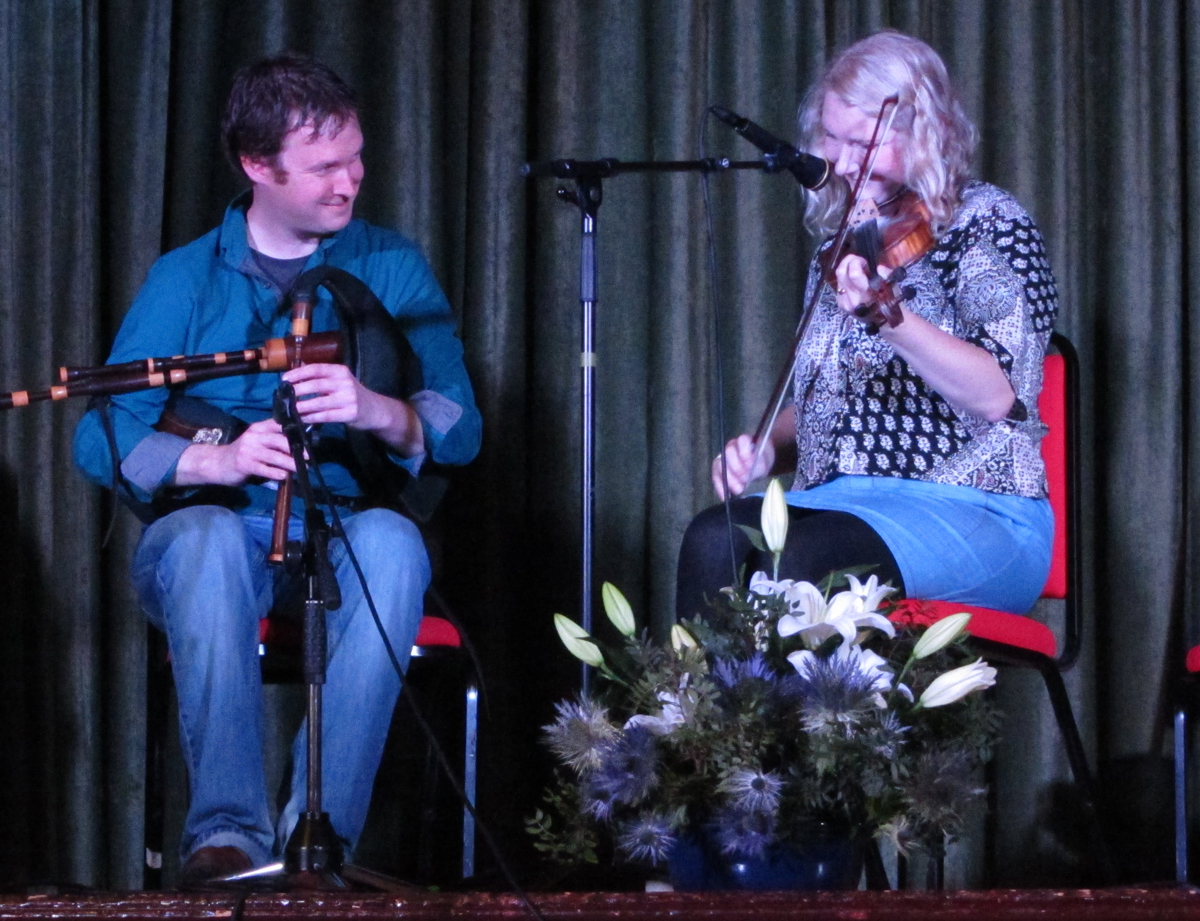
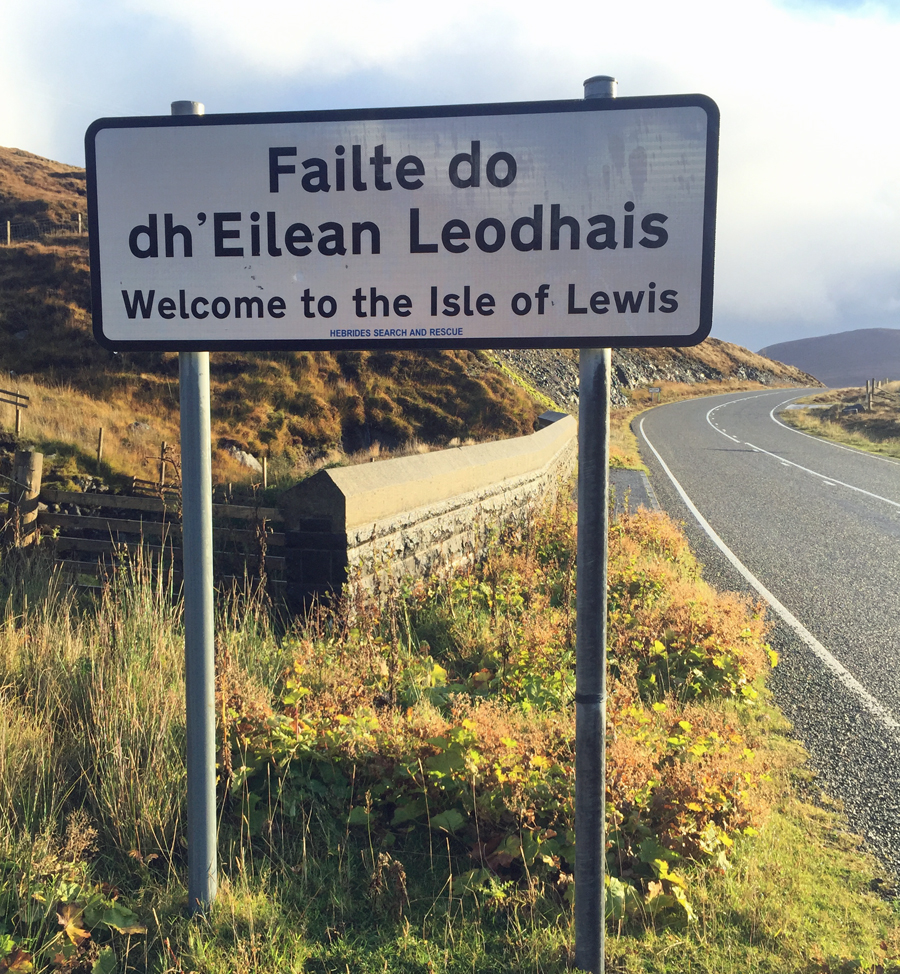
Let me tell you about Ceòlas. More particularly, let me tell you about Ceòlas Sgoil Chiùil Shamhraidh.
First
off, there is a clue in the title that tells you that music plays a
dominant part in Ceòlas. However, let’s not lose sight of the fact that
Ceòlas does not have an English name. That alone tells you that this is
all about the Gaelic: Language, music, and dance. Even if you’re like me
and cannot play or sing a note and cannot dance a step, you can’t help
but realise that none of these are ‘Gaelic’ in isolation. Gaelic is the
language, the song, the dance, the poetry, the stories, and the people.
It
is this encapsulation that makes Ceòlas such a breathtakingly ‘real’
event. It’s not just language lessons, piping practice or dance classes,
it’s pure Gaelic in Action within a Gaelic-speaking community.
Ceòlas
has been going for twenty years now in its home of South Uist in the
Western Isles, and it’s been going from strength to strength. It’s
evolved thanks to a dedicated and hard-working local team who know the
event from the inside out. As such, it can be a bit daunting for the
first-time Ceòlas attendee, as sometimes it’s not very clear exactly
what it’s all about.
Having just completed my first Ceòlas event, I thought I’d present to you while I’m still fresh: ‘Ceòlas for Beginners’
EVENT OUTLINE
This outline is based on the 2016 event. It might be different in future!
The main summer school takes place the first week in July in Dalabrog on the island of South Uist.
While
classes run from Monday to Friday, ideally you should plan to be in
Dalabrog itself from Saturday to Saturday. Registration is at 1230 on
Sunday, and while classes finish at 4pm Friday it would be a pity to
miss the Cèilidh Mòr on Friday night. Which is actually a concert rather
than a cèilidh. Confused? You will be.
FIRST CHOICE, SECOND CHOICE, AND GAELIC
When you apply you’ll be asked for your First Choice and your Second Choice subjects.
Now,
in most cases you go to a summer school to do one thing (e.g. advanced
Gaelic), and when asked for a second choice you tend to think that this
is what you wouldn’t mind doing if your first choice wasn’t available,
right?
Wrong.
This is a great example of where it works
better in Gaelic where you are asked for your ‘Prìomh Chuspair’ agus ur
‘Darna Cuspair’.
What I didn’t realise as first, but is a
terrific bonus, is that you don’t have to choose just one subject to do
at Ceòlas, you can choose TWO SUBJECTS! If that is made clear anywhere, I
obviously missed that memo.
This means you can do Advanced
Gaelic and Beginner’s Step Dancing, Ceòl Mòr and song, Piping for
Dancing and Intermediate Gaelic… or, in my case, ‘just Gaelic’. In the
case of the advanced Gaelic group, we simply switched tutors for ‘First
Choice’ (Catriona Nic an t-Saor) and ‘Second Choice’ (Alec Bhaltos).
Confused?
Oh, it gets better. On top of that there is compulsory Gaelic for All
for half an hour a day in the morning at six levels, from ‘Don’t have a
word’ to native speakers/fluent for whom there is a talk. Of course, if
you really don’t want to go to Gaelic nobody is going to force you, but
if that’s your attitude then it does beg the question why you’d go to
Ceòlas rather than just take instrument or singing lessons local to
home.
CROSSOVER
To really mash things up, the last
session of the day is called ‘Crossover’. No amount of explanations from
the patient organisers could decipher to me exactly what this was about
beforehand. However, it’s really quite simple. The organisers put two
complimentary disciplines together, like fiddle and dance, and together
you work out a short performance for a Friday afternoon show. In the
Gaelic classes, we got together and under the guidance of Catriona, put
on a comedy sketch about a dentist’s waiting room. Having never done
drama before, and loving both comedy and Gaelic, I was absolutely in my
element.
TIMETABLE AND CLASSES
The main ‘centre’ for now
is Dalabrog Primary School - a brand new state-of-the-art building. Some
of the classes - I think the piping and some of the dancing - took
place in halls nearby with a minibus service ferrying folks to and from
the school. Class size from what I saw was small. The most people in any
Gaelic class I did was eight. The day starts at 9.30am and finishes
earlier than I expected at 3.30pm but trust me - this is long enough!
Throughout
the day I’d do six Gaelic classes of between 30 minutes and one hour.
The first hour of the day, my ‘First choice’ was with the wonderful
Catriona, and she always eased us into the day kindly and gently with an
hour’s relaxed conversation. There were never any books or handouts,
and I don’t think I wrote anything down.
After coffee break, the
30 minute ‘Gaelic for all’ class I chose to do with Alec Bhaltos, so I
had different classmates to my previous lesson, and we always went
through useful sentences to help expand our vocab in everyday
situations. After that, it was an hour of ‘second choice’, so I stayed
with Alec but my classmates changed. We did grammar revision and vocab
expansion in Alec’s inimitably wonderful style. I’ve not met one person
who doesn’t think he’s a brilliant teacher and a lovely man.
Lunch
is served at 1230 in the main canteen, and while the soup received rave
reviews from all who tried it, I stuck to a baked potato with filling
every day, and with a can of pop I paid £3.15.
After lunch, an
hour of ‘First Choice’ Gaelic normally took place outwith the classroom,
e.g. a visit to the Kildonan Museum or a tour of the new Lochboisdale
Marina in Gaelic.
Tea break back at base (cup of tea and slice
of cake = £1), then 45 minutes of ‘crossover’, which for us meant
reading, re-writing, practicing, and rehearsing our play. In other
words, being very silly and having lots of laughs…in Gaelic!
THE SIX Cs
So
that’s the serious stuff taken care of, but Ceòlas is only partly about
the lessons. Arguably the most important bits are what goes on outwith
the school, and that is the six Cs:
Ceòl
Coiseachd
Coimhearsneachd
Còmhradh
Cèilidh
and…most importantly, CÈIC!
CEÒL
(music) pops up everywhere. The local hotels each hold a session on a
rota which is displayed at the event. There are also various concerts in
the week too - fiddles and dance, song, and piping.
COISEACHD
(walking). A couple of walks were organised throughout the week that
took place straight after classes ended. Both ended with a dram ;)
COIMHEARSNEACHD
IS CÒMHRADH (community and conversation). This is arguably Ceòlas’
trump card. It takes place in an area that lives and breathes Gaelic. I
stayed on a Caravan Club campsite in North Boisdale with the MacInnes
family, who all speak to me in Gaelic. As I was thrapping about on my
motorbike one day, I engaged in conversation with a local motorist in a
‘passing place’ (a regular island custom) and within two sentences we
were in Gaelic. In my experience, I only ever had to revert to English
in the Co-Op. That was it.
CÈILIDH - The Welcome Cèilidh, House Cèilidhs, and the Cèilidh Mòr. More on those later…
CÈIC - Most Ceòlas participants end up eating their own bodyweight in locally home-made cake during the week. It’s fantastic.
CÈILIDH GUIDE
There
are three events in the week that are all called cèilidhs, yet they are
all completely different to each other. My wee guide is intended to
help you work through what is what.
The Welcome Cèilidh - Sunday
evening. This is a cross between a knees-up, a concert, and the biggest
collection of cake and sandwiches you’ve seen in your life. It’s the
best £5 you’ll ever spend. Get there on time, don’t be fashionably late
or you’ll end up like me, stuck by the bar and unable to see most of the
acts. Now and again there are some dances where those who know the
steps can get up and strip the willow or dash the white sergeant. At
half-time the entertainment stops and the feeding starts. You get the
feeling that there is a wee bit of local competition in the cake-making
stakes because the standard of baking is incredibly high. On top of all
this, there is a bar selling soft drinks for £1 and stronger stuff for
£2-£3.
House Cèilidhs - Tuesday evening. Now, I didn’t go on one
myself this time. I will do next time. In the school dining area, lists
are put up with the names of local people who are throwing their
kitchen doors open for Ceòlas participants to attend a proper Hebridean
Cèilidh. If you want to go, you write you name on one of the lists.
Guests are expected to take a wee gift for their hosts, for which in
return they will once again be fed and watered to the gills. Whether you
get singing or music depends on the hosts and your fellow guests. I
have a few thoughts about this, which I will mention later.
Cèilidh
Mòr - Friday evening. The word ‘cèildih’ has a broad range of meanings,
but it would be easier for dumbwits like me to refer to this event as
‘The big concert’, as it is absolutely nothing like the previous two
cèilidhs. This is a formal seated concert that must be one of the
hottest tickets on the island, as it sold out this year. Luckily, I
bought my ticket in good time. There is no food, and your only beverage
option is to buy a soft drink during the interval. Other than that, you
just sit and you listen…you listen to some of the finest music you’ll
ever hear, from some staggeringly talented musicians.
So is
there anything not to like? I try to write and honest and impartial blog
after all. Well, there are three things I feel are worth mentioning in
case anyone is interested:
First off, the ‘Advanced Gaelic’ was
at the perfect level for me. I loved it and learned heaps. However, I
know a few learners who are at a higher level than me and still chase
the fruit of fluency. I do wonder if the level of Gaelic would be high
enough for them. As there are (currently) only three levels of Gaelic,
the two levels other than ‘complete beginner’ have to accommodate a very
wide range of abilities. Let’s hope that an increase in students may
result in an increase in levels of Gaelic.
Seondly, as this was
my first Ceòlas and I didn’t really know anyone else there very well, I
was not brave enough to attend a House Cèilidh. I don’t play, I don’t
sing, I had no idea who the hosts were, and I didn’t know who did and
didn’t have Gaelic. What would have been great would have been if one
House Cèilidh was earmarked as the Gaelic House Cèilidh - i.e.
Gaelic-speaking hosts and Gaelic-speaking guests. I’d have signed up for
that one like a shot. Again, let’s hope…
Finally, there is only
one thing really that would turn this fantastic experience into a
Utopian Experience, and that would be Gaelic-speaking host families.
Most people stayed in hotels, B&Bs, and rented houses. Me, I stayed
in my caravan on the Gaelic-speaking site nearby which offered me some
great opportunities to speak with my hosts, but to actually stay with a
Gaelic-speaking family would just be the cream on the cake (we’re back
to cakes again). Finding accommodation is the one thing that seems to
prevent people attending Ceòlas, and home stays could not only plug the
accommodation gap, but enhance the whole ‘Ceòlas’ experience even more,
as well as giving the chance for some local folk to earn an extra bit of
income.
There are ambitious plans afoot for Ceòlas to
build its own, purpose-built arts centre in South Uist in partnership
with the University of the Highlands and Islands, which is very exciting
news. That will be a couple of years away yet, at least. My
understanding is that these plans do not include any accommodation, so
let’s hope the idea of Home Stays takes off if it’s to be as successful
as it deserves to be.
If Gaelic to you means Grammar Books and
Classrooms, then maybe Ceòlas is not for you. However, if you tingle at
the very idea of the richness of Real-Life Gaelic in the Real World,
where you finish a week and it feels strange to speak English again,
then definitely book a week at Ceòlas next July. Just don’t book it too
soon…at least not till I’ve secured my place.