Showing posts with label speaking. Show all posts

Monday, 26 September 2016

How long DOES it take to learn Gaelic?


So, how long *does* it take to learn Gaelic?

Three years.

Next question?


OK, maybe I had better expand on that a little bit.

First off, let's rephrase the question:

'How long does it take the average person of average ability with a fairly busy life to learn Gaelic to a conversational level?'

I reckon, in my experience as a very average learner, it takes between two and a half and three years. Roughly.

If you've cast half an eye over this blog before, you'll know I am a massive fan of the BBC Radio nan Gàidheal Lerners' programme 'Beag air Bheag' with Iain Urchardan.  Every week Iain introduces 'Neach-ionnsachaidh na seachdain', Learner of the Week, and these people each have a very different story to tell.

I remember in an early series, a very busy housewife who was massively commited to bringing up her family and to her church was barely able to string a sentence together after two years of learning. However, she still admirably put herself forward for an interview, and it was done in a way that she could cope with. On the other side of the coin, in the most recent series (Series 4) you had two different dudes (Martin B and Carmine) who had pretty much reached fluency after learning for barely a year. All these people serve to inspire, be it to show that even when you barely have a second to yourself you can pick up a little bit here and there, or that if you have the time and the inclination you can immerse yourself and become fluent in a comparatively short time.

These examples are, in my view, extreme. There is no doubt in my mind that Martin B and Carmine are very intelligent and focussed men. Most of us, me included, are neither particularly daft nor particulary bright. We have jobs and social lives and make the most of our free time. While the 'Holy Grail' in Gaelic is to reach fluency, what really makes the whole thing really come to life is to reach a conversational level - a level at which we can express ourselves. If you're doing the 'regular route' of distance learning by Cùrsa Inntrigidh followed by Cùrsa Adhartais with Sabhal Mòr Ostaig, that 'Eureka' moment comes roughly towards the end of the first year of Cùrsa Adhartais or during the second year.

The first two years of learning Gaelic, in my experience, can be the toughest. You learn and learn and learn and you still can't seem to be able to string a sentence together. Sure, you can say 'Ciamar a tha thu?' and as long as someone comes out with a response you know, you're good. You may get a few sentences down the line then the whole thing will stall. The person you're speaking to uses phrases and words you really don't understand, or you don't have the vocabulary to express what you want to say, and the sheer frustration makes you end up switching to English and you loose face.

However, if you keep at it and keep practicing your 'key phrases' and expanding your vocab, you'll eventually reach that Eureka moment where you hold your first conversation entirely in Gaelic. It might be broken Gaelic, there may be mistakes galore and the odd bit of 'Beurla' here and there, but you somehow manage to keep it all on track until the 'Mar sin leat' or 'Chì mi a-rithist thu' at the end. I guarantee you, the first time that happens, you'll be walking on air.

If you look back through the blog you'll see my frustration in the earlier days with the entry 'Why won't you talk to me?'

However, as I toured the Islands doing my project for 'Saoghal na Gàidhlig' (Module 7 of Cùrsa Adhartais') I found Gàidhlig gu leòr. It seems that if you stick at it, and people start to get to know you and know your story, you'll get Gaelic wherever it is found.

Of course, nobody but nobody ever stops learning Gaelic. Once you hit conversational level, the next stage is to expand your vocab and eliminate your mistakes until you hit fluency. Yet Gaelic is such a rich language, even the most fluent and learned speakers will always admit that there is plenty more out there to learn. That's the joy of Gaelic - its richness beyond measure. If you keep at it, it's all there for the taking.

You just have to keep going at your own pace; whether that is three months or three years, it really doesn't matter how long it takes to get there, just as long as you simply keep going. That's all you have to do.


Tuesday, 12 July 2016

Ceòlas - A Beginner's Guide


Let me tell you about Ceòlas. More particularly, let me tell you about Ceòlas Sgoil Chiùil Shamhraidh.

First off, there is a clue in the title that tells you that music plays a dominant part in Ceòlas. However, let’s not lose sight of the fact that Ceòlas does not have an English name. That alone tells you that this is all about the Gaelic: Language, music, and dance. Even if you’re like me and cannot play or sing a note and cannot dance a step, you can’t help but realise that none of these are ‘Gaelic’ in isolation. Gaelic is the language, the song, the dance, the poetry, the stories, and the people.

It is this encapsulation that makes Ceòlas such a breathtakingly ‘real’ event. It’s not just language lessons, piping practice or dance classes, it’s pure Gaelic in Action within a Gaelic-speaking community.

Ceòlas has been going for twenty years now in its home of South Uist in the Western Isles, and it’s been going from strength to strength. It’s evolved thanks to a dedicated and hard-working local team who know the event from the inside out. As such, it can be a bit daunting for the first-time Ceòlas attendee, as sometimes it’s not very clear exactly what it’s all about.

Having just completed my first Ceòlas event, I thought I’d present to you while I’m still fresh: ‘Ceòlas for Beginners’

EVENT OUTLINE

This outline is based on the 2016 event. It might be different in future!


The main summer school takes place the first week in July in Dalabrog on the island of South Uist.

While classes run from Monday to Friday, ideally you should plan to be in Dalabrog itself from Saturday to Saturday. Registration is at 1230 on Sunday, and while classes finish at 4pm Friday it would be a pity to miss the Cèilidh Mòr on Friday night. Which is actually a concert rather than a cèilidh. Confused? You will be.

FIRST CHOICE, SECOND CHOICE, AND GAELIC

When you apply you’ll be asked for your First Choice and your Second Choice subjects.

Now, in most cases you go to a summer school to do one thing (e.g. advanced Gaelic), and when asked for a second choice you tend to think that this is what you wouldn’t mind doing if your first choice wasn’t available, right?

Wrong.

This is a great example of where it works better in Gaelic where you are asked for your ‘Prìomh Chuspair’ agus ur ‘Darna Cuspair’.

What I didn’t realise as first, but is a terrific bonus, is that you don’t have to choose just one subject to do at Ceòlas, you can choose TWO SUBJECTS! If that is made clear anywhere, I obviously missed that memo.

This means you can do Advanced Gaelic and Beginner’s Step Dancing, Ceòl Mòr and song, Piping for Dancing and Intermediate Gaelic… or, in my case, ‘just Gaelic’. In the case of the advanced Gaelic group, we simply switched tutors for ‘First Choice’ (Catriona Nic an t-Saor) and ‘Second Choice’ (Alec Bhaltos).

Confused? Oh, it gets better. On top of that there is compulsory Gaelic for All for half an hour a day in the morning at six levels, from ‘Don’t have a word’ to native speakers/fluent for whom there is a talk. Of course, if you really don’t want to go to Gaelic nobody is going to force you, but if that’s your attitude then it does beg the question why you’d go to Ceòlas rather than just take instrument or singing lessons local to home.

CROSSOVER

To really mash things up, the last session of the day is called ‘Crossover’. No amount of explanations from the patient organisers could decipher to me exactly what this was about beforehand. However, it’s really quite simple. The organisers put two complimentary disciplines together, like fiddle and dance, and together you work out a short performance for a Friday afternoon show. In the Gaelic classes, we got together and under the guidance of Catriona, put on a comedy sketch about a dentist’s waiting room. Having never done drama before, and loving both comedy and Gaelic, I was absolutely in my element.

TIMETABLE AND CLASSES

The main ‘centre’ for now is Dalabrog Primary School - a brand new state-of-the-art building. Some of the classes - I think the piping and some of the dancing - took place in halls nearby with a minibus service ferrying folks to and from the school. Class size from what I saw was small. The most people in any Gaelic class I did was eight. The day starts at 9.30am and finishes earlier than I expected at 3.30pm but trust me - this is long enough!

Throughout the day I’d do six Gaelic classes of between 30 minutes and one hour. The first hour of the day, my ‘First choice’ was with the wonderful Catriona, and she always eased us into the day kindly and gently with an hour’s relaxed conversation. There were never any books or handouts, and I don’t think I wrote anything down.

After coffee break, the 30 minute ‘Gaelic for all’ class I chose to do with Alec Bhaltos, so I had different classmates to my previous lesson, and we always went through useful sentences to help expand our vocab in everyday situations. After that, it was an hour of ‘second choice’, so I stayed with Alec but my classmates changed. We did grammar revision and vocab expansion in Alec’s inimitably wonderful style. I’ve not met one person who doesn’t think he’s a brilliant teacher and a lovely man.

Lunch is served at 1230 in the main canteen, and while the soup received rave reviews from all who tried it, I stuck to a baked potato with filling every day, and with a can of pop I paid £3.15.

After lunch, an hour of ‘First Choice’ Gaelic normally took place outwith the classroom, e.g. a visit to the Kildonan Museum or a tour of the new Lochboisdale Marina in Gaelic.

Tea break back at base (cup of tea and slice of cake = £1), then 45 minutes of ‘crossover’, which for us meant reading, re-writing, practicing, and rehearsing our play. In other words, being very silly and having lots of laughs…in Gaelic!


THE SIX Cs

So that’s the serious stuff taken care of, but Ceòlas is only partly about the lessons. Arguably the most important bits are what goes on outwith the school, and that is the six Cs:

Ceòl
Coiseachd
Coimhearsneachd
Còmhradh
Cèilidh
and…most importantly, CÈIC!

CEÒL (music) pops up everywhere. The local hotels each hold a session on a rota which is displayed at the event. There are also various concerts in the week too - fiddles and dance, song, and piping.
COISEACHD (walking). A couple of walks were organised throughout the week that took place straight after classes ended. Both ended with a dram ;)
COIMHEARSNEACHD IS CÒMHRADH (community and conversation). This is arguably Ceòlas’ trump card. It takes place in an area that lives and breathes Gaelic. I stayed on a Caravan Club campsite in North Boisdale with the MacInnes family, who all speak to me in Gaelic. As I was thrapping about on my motorbike one day, I engaged in conversation with a local motorist in a ‘passing place’ (a regular island custom) and within two sentences we were in Gaelic. In my experience, I only ever had to revert to English in the Co-Op. That was it.
CÈILIDH - The Welcome Cèilidh, House Cèilidhs, and the Cèilidh Mòr. More on those later…
CÈIC - Most Ceòlas participants end up eating their own bodyweight in locally home-made cake during the week. It’s fantastic.


CÈILIDH GUIDE

There are three events in the week that are all called cèilidhs, yet they are all completely different to each other. My wee guide is intended to help you work through what is what.

The Welcome Cèilidh - Sunday evening. This is a cross between a knees-up, a concert, and the biggest collection of cake and sandwiches you’ve seen in your life. It’s the best £5 you’ll ever spend. Get there on time, don’t be fashionably late or you’ll end up like me, stuck by the bar and unable to see most of the acts. Now and again there are some dances where those who know the steps can get up and strip the willow or dash the white sergeant. At half-time the entertainment stops and the feeding starts. You get the feeling that there is a wee bit of local competition in the cake-making stakes because the standard of baking is incredibly high. On top of all this, there is a bar selling soft drinks for £1 and stronger stuff for £2-£3.

House Cèilidhs - Tuesday evening. Now, I didn’t go on one myself this time. I will do next time. In the school dining area, lists are put up with the names of local people who are throwing their kitchen doors open for Ceòlas participants to attend a proper Hebridean Cèilidh. If you want to go, you write you name on one of the lists. Guests are expected to take a wee gift for their hosts, for which in return they will once again be fed and watered to the gills. Whether you get singing or music depends on the hosts and your fellow guests. I have a few thoughts about this, which I will mention later.

Cèilidh Mòr - Friday evening. The word ‘cèildih’ has a broad range of meanings, but it would be easier for dumbwits like me to refer to this event as ‘The big concert’, as it is absolutely nothing like the previous two cèilidhs. This is a formal seated concert that must be one of the hottest tickets on the island, as it sold out this year. Luckily, I bought my ticket in good time. There is no food, and your only beverage option is to buy a soft drink during the interval. Other than that, you just sit and you listen…you listen to some of the finest music you’ll ever hear, from some staggeringly talented musicians.


So is there anything not to like? I try to write and honest and impartial blog after all. Well, there are three things I feel are worth mentioning in case anyone is interested:

First off, the ‘Advanced Gaelic’ was at the perfect level for me. I loved it and learned heaps. However, I know a few learners who are at a higher level than me and still chase the fruit of fluency. I do wonder if the level of Gaelic would be high enough for them. As there are (currently) only three levels of Gaelic, the two levels other than ‘complete beginner’ have to accommodate a very wide range of abilities. Let’s hope that an increase in students may result in an increase in levels of Gaelic.

Seondly, as this was my first Ceòlas and I didn’t really know anyone else there very well, I was not brave enough to attend a House Cèilidh. I don’t play, I don’t sing, I had no idea who the hosts were, and I didn’t know who did and didn’t have Gaelic. What would have been great would have been if one House Cèilidh was earmarked as the Gaelic House Cèilidh - i.e. Gaelic-speaking hosts and Gaelic-speaking guests. I’d have signed up for that one like a shot. Again, let’s hope…

Finally, there is only one thing really that would turn this fantastic experience into a Utopian Experience, and that would be Gaelic-speaking host families. Most people stayed in hotels, B&Bs, and rented houses. Me, I stayed in my caravan on the Gaelic-speaking site nearby which offered me some great opportunities to speak with my hosts, but to actually stay with a Gaelic-speaking family would just be the cream on the cake (we’re back to cakes again). Finding accommodation is the one thing that seems to prevent people attending Ceòlas, and home stays could not only plug the accommodation gap, but enhance the whole ‘Ceòlas’ experience even more, as well as giving the chance for some local folk to earn an extra bit of income.


There are ambitious plans afoot for Ceòlas to build its own, purpose-built arts centre in South Uist in partnership with the University of the Highlands and Islands, which is very exciting news. That will be a couple of years away yet, at least. My understanding is that these plans do not include any accommodation, so let’s hope the idea of Home Stays takes off if it’s to be as successful as it deserves to be.

If Gaelic to you means Grammar Books and Classrooms, then maybe Ceòlas is not for you. However, if you tingle at the very idea of the richness of Real-Life Gaelic in the Real World, where you finish a week and it feels strange to speak English again, then definitely book a week at Ceòlas next July. Just don’t book it too soon…at least not till I’ve secured my place.


Tuesday, 3 May 2016

Short Courses at Sabhal Mòr Ostaig


Apologies for the lack of posts recently. It's been a mad few months regarding my course. Not being the brightest button in the box, it's been a bit of a slog for me.

However, the academic year has now finished (woo-hoo!) and I can catch up on a few entries I've been meaning to write for weeks. Here's the first, and it's dedicated to the Short Courses at Sabhal Mòr Ostaig on the Isle of Skye.

Whether you don't have one word of Gaelic, or whether you're a native speaker just wanting to brush up on your grammar and literacy, there's a short course for you. There are also diverse courses such as singing, fiddle, and photography, where Gaelic isn't necessary, but practiced in a Gaelic environment.

So what can you expect from a Short Course?

Well, a lot will depend on your tutor and your fellow class mates.

Don't fret too much about what level to go in at. It's pretty obvious to go in for Gaelic 1 if you've not got any Gaelic, or Gaelic 2, 3, 4, if you're going through the stages one by one, but if you're coming in from the cold of a distance-learning course, or if you want to refresh your rusty skills, it can be a bit of a challenge to know which level to go for .

Naturally, it makes sense to discuss any concerns with the short course team before you enrol, but if you do find your class too easy/too difficult/not your style, you can normally switch to a different class during the week if there is space. A friend of mine switched twice in a week!

Lesson periods are generally 75-90 minutes long, with two sessions in the morning and two in the afternoon. There are no lessons on a Wednesday afternoon (trust me, you'll be glad of the rest) and Friday afternoon is only one session and an early finish to allow people to get home.

You won't get bored in the evening as there is always something on. Monday to Wednesday there is an hour's 'Cearcall Còmhraidh' (Gaelic conversation) which is open to all, and there are events such as quizzes and concerts. Thursday evening is the grand 'Cèilidh' where classes perform a song, sketch, or poems that they've been learning throughout the week. Nobody is put 'on the spot', it's all very much a group effort and it's a really good craic.


As for accommodation, the rooms are all private with ensuite loo and shower facilities and a kitchenette either in the room or down the corridor; basic, clean, and comfortable. You can, if you wish, camp in a tent or stay in your camper van/motorhome/caravan, but be aware that there are no 'camper's facilities' apart from WCs and payable showers in the main building, and there is nowhere to empty chemical loo waste. Camping is, however, free of charge as long as you're attending a course, but the cost of hooking up to the mains if you wish to do so is prohibitive. You're better off charging your phone and laptop during the day while you're in class if you don't have a solar panel.

As well as being a Gaelic environment in which to immerse yourself, the college also has the advantage of a *stunning* location:


For many folks, the trip to Skye is a long one. As such, a lot of people do two, three, or even four consecutive courses and stay for up to a month. You're pretty much left to your own devices at weekends, so a car would be useful - or a friend with a car. Armadale is about a mile away so there is always the possibility to get the ferry to Mallaig and the Small Isles if you wish, or just take a walk in the local area. Sadly the library is closed at weekends which is a bummer.

Is there anything not to like? Well, by the time you add on accommodation and meals it can start to get a little spendy, but no more that you'd normally spend on a week's holiday. It's possible you may end up with classmates or a tutor that you don't get along with, but that could happen anywhere on any type of course. If you're that unhappy you can switch courses.

On one or two of the advanced courses I've been on there was homework to do, which took up the whole evening after a day's lessons, and prevented me from getting to the conversation sessions and the evening socials. I've now decided that that is really not on, and have made my thoughts clear to the powers that be. Remember that YOU are paying for the course and if there is something that you don't want to do, then simply don't do it. But I would hope that the homework element of the advanced classes has now been dropped.

But let's get back to the good stuff. On top of the ability to speak Gaelic all day, every day, there is also an amazing library to lose yourself in. It's not all high-brow academic stuff in there, being a transport geek and a bit of an Anorak, I particularly enjoyed the railway and ferry books.

Above all, attending a Short Course allows you to meet up with like-minded folk. People I've met at Sabhal Mòr have become firm friends. And those friends have been absolutely invaluable, especially during the 'low' periods that we all get at times. Whether it is practical help with the genitive case, getting together on Skype for conversation practice, or support for when the going gets tough, making such wonderful friends has been the most important part of every short course I've attended. I could not imagine my Gaelic studies without them.

You might not meet anyone you like first or even second time around, but do give the Short Courses a try. You won't realise it at the time, but your 'cuid Ghàidhlig' and your confidence in using it will soar.

http://www.smo.uhi.ac.uk/en/cursaichean/cursaichean-goirid/


Sunday, 20 December 2015

In search of Gaelic - Glasgow


I would love to have the time and resources to devote to a full-time course at Sabhal Mòr Ostaig, but my job in London and my wee dog Dougal put paid to that. Fortunately, living simply in an Airstream trailer means that I only have to work 50%, and as I work in the travel industry I can do a ton of extra shifts during the holiday seasons, then take extra time off during term time.

That is exactly what I did this autumn. I took time off which meant I only needed to go back to London every fortnight, giving me four clear runs of 10 days in Glasgow. Commuting was done on the Caledonian Sleeper, and what a wonderful way to travel that is:


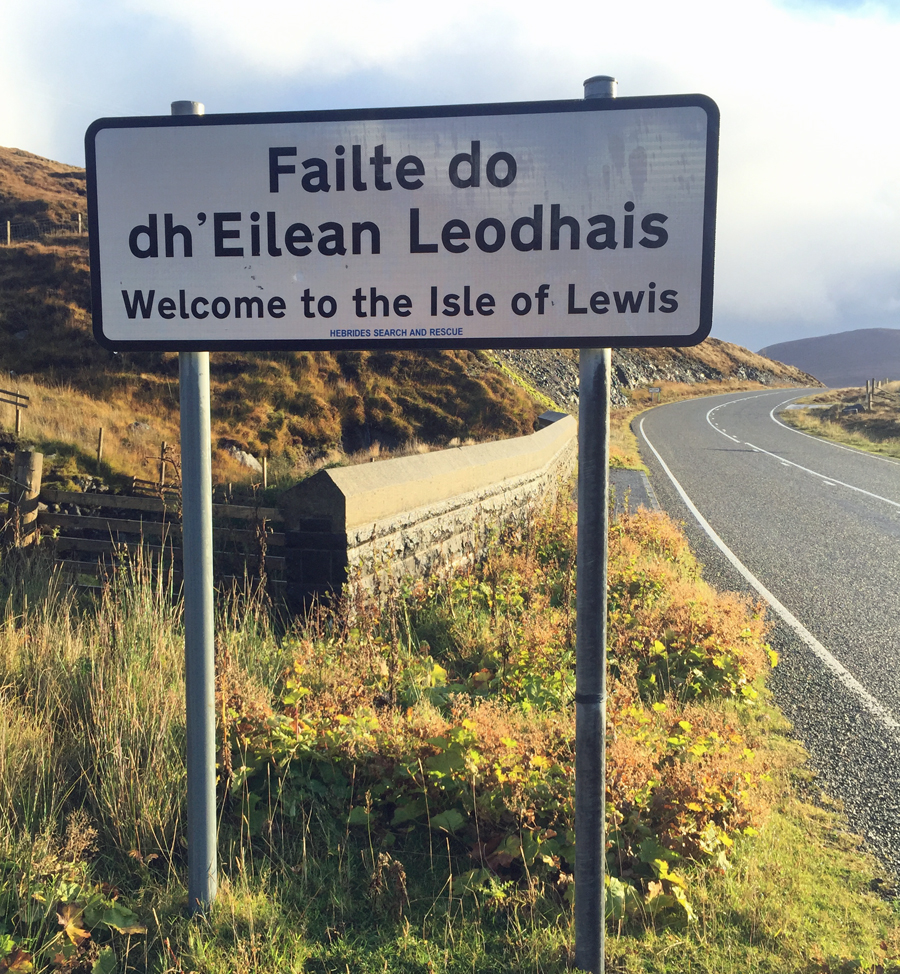
On the first set of days off, I headed on up to the Isle of Lewis in search of Gaelic (see earlier blog entry), then on the next three blocks I stayed in the city itself.

What a brilliant time I had. It is fair to say that if you have the time, and the devotion, you can find a stack of Gaelic in the city.

If you look at the Gaelic Map of Glasgow, you'll see that there are opportunities galore for structured learning, but not so many 'drop in' sessions of the kind I was looking for.

A great place to start when looking for more informal Gaelic events is the An Lòchran website (click on the name) where you can find a list of events coming up. Be warned that many events are only listed a week or so before they take place, so keep checking back. 

I hit jackpot as soon as I landed in Glasgow, as there was a stack of events going on.

First off was the Gaelic music session at the Lios Mòr (Lismore) pub in Partick on the first Wednesday of the month. I went along and for the first hour enjoyed the music but didn't really know anybody. However, Calum (of Beag Air Bheag fame) introduced himself to me and we had a good chat for half an hour in Gaelic, then I met a really nice guy MB who was also a more advanced learner, and we chatted for the rest of the night. It was a brilliant evening. I guess, though, like any pub night, you will have some nights that are quiet and others that are terrific.


Two nights later on the Friday night I was in the basement of the Argyll Hotel on Sauchiehall Street at Àdamh O' Broin's event, the An Gealbhan social. The night I went was a quiet night and my Gaelic wasn't quite up to the fluency of the others there, but it was a fun and interesting evening.


Next day, by pure luck, the Irish/Scottish group Gaels Le Cheile put on a day of language classes, aimed mainly at those looking to learn Irish Gaelic but also with sessions for those of us looking to improve our Scottish Gaelic. As such, I spent a fantastic day with the brilliant Joy Dunlop, going through a ton of pronounciation exercises and other really useful stuff. The event was, sadly, under-subscribed but I wonder if that's because there wasn't a huge amount of advance notice given. I would seriously take a day off work and make the trek from Dover to Glasgow for another session like that.

Finally, the following Wednesday, I made the journey back to Partick for the lunchtime session at the Gaelic Bookshop (An Lèanag) with Inbhich gu Fileanteas, a structured two hour weekly session for those looking to improve their Gaelic fluency. It was a super crowd and I was made to feel warmly welcome. The two hour session is led by two separate fluent Gaelic speakers and it was a really worthwhile experience; so much so that I shall be heading back hopefully once every month or two just to catch up with them all as work and finances allow.


Let's not forget that there are plenty of other opportunities in Glasgow to put your Gaelic skills to test, whether it is craic at the Park Bar or one of the many other formal learning events that take place through the university or through An Lòchran.


Sadly, the combination of migraine attacks and needing to go to work at weekends curtailed my activities and I didn't get to as many events as I had originally planned. But I have to say, if you're looking for somewhere to go and practice your Gaelic and you are prepared to 'put yourself out there', Glasgow is definitely the place. 


Thursday, 5 November 2015

I'M RICH!!!


The past couple of weeks have brought a few ups and downs in my Gaelic journey, but tonight we had a bit of a Eureka moment.

Changes and improvements can happen so subtly that you don't notice that they are happening. Sometimes, we are so obsessed with what we don't know, we forget to focus on what we do know.

I suddenly realised that I am very, very rich. No, I haven't won the lottery, and a part-time job as a train guard is never going to see me trade in my truck for a Range Rover.

Let me explain... Over the past six months or so I've been toiling away at the Gaelic, but this has been made easier thanks to resources like 'Beag Air Bheag' podcasts, watching entertaining programmes like 'Fonn Fonn Fonn' on BBC iPlayer, and enjoying the Look@LearnGaelic Videos on the smart and refreshed learngaelic.net website. My 'caraidean-cànain' (study buddies) whom I try to Skype as often as possible have been a true source of help and support.

Over the past couple of weeks I have really upped my game... I have something 'big' to aim for which happens next week, and I will tell you about that very soon. Suffice to say that with the help and support of my caraid-cànain MR in London, I've been doing tons of work on my spoken Gaelic. I've been expanding my vocab and just doing simple stuff like learning stock phrases to questions that people are always going to get... where I live, why I am studying Gaelic, what I do in my job, and so on. It sounds so simple, but one thing I had not yet done was to invest time in learning 'stock' phrases until they became second nature. OK, the 'second nature' thing has yet to come, but we are getting there.

This work, and the fact I've had a bit of grief (haven't we all) with the Anti-Gaelic Bigots recently, made me stop and take stock of my Gaelic journey. And that is what has bowled me over completely.

'What has Gaelic brought into your life?'

Oh. Mo. Chreach. I've just stopped, thought about this, realised the richness it has brought, and I am completely blown away. Where do I start?


Music - So much wonderful music I would never otherwise have discovered.

Friends - loads and loads of new friends. All there to learn new ideas from, help widen my mind, and to support each other.

Culture - Poetry and song, live music and stories. Real entertainment from people with passion and talent, not being strapped to the telly like a brain-dead force-fed zombie.

History - Still early days for me, but history is starting to come to life and actually mean something.

Geography - That deeper understanding and appreciation of the landscape when you are in the Highlands and Islands, and the place names coming to life.

Being part of something special - Gaelic is not the easiest language in the world to learn for many reasons. It's not common. So to learn it is actually something quite special and helps form a strong bond of understanding with other learners.

Having something to say - Being at a party or meeting new people. They are all talking about their jobs in the city, the football, or how they like to do DIY at weekends. You have a story to tell about Gaelic and your journey...suddenly everyone is interested. They may not understand, they might think you're a bit bonkers, but they are interested.

A safe haven - In times of trouble and crisis, Gaelic can sometimes be an anchor, a 'safe place' where you can immerse yourself for a bit. It's consitent, it's grounding, and it's not going anywhere.

Self-belief - That feeling when you realise that you have just conversed with someone, even if it was just saying what a lovely day it is. You did it!

Being a part of the bigger picture - Every single person that learns Gaelic, at any age and to any level, is contributing to the momentum of getting the language back into the mainstream.

Hope for the future - Nobody, not even the best fluent speaker, knows it all. Gaelic is a bottomless well of riches and you will never use it all up no matter how much you try. For me personally, that hope translates into the possibilty of embarking on an Honours Degree; something I have never before acheived, and something that I never thought I would ever be able to do.


That 'Eureka' moment hit me tonight when I was asked to talk for five minutes - in Gaelic - about 'Gaelic and me'. Of course I made mistakes, but I could have talked for far, far, longer.

The journey with Gaelic, as I said earlier, is one of ups and downs. But when you are on a downer, take a moment and consider the richness it has brought to YOUR life. Me, I am absolutely blown away by it.


Monday, 26 October 2015

In search of Gaelic, my road trip to the Isle of Lewis


Last week, in an attempt to improve my spoken Gaelic and try and do something about my horrendous English accent, I nipped up to the Isle of Lewis for a couple of days.

Being a bit of a ferry geek, I was keen to take a trip on CalMac's new ferry the Loch Seaforth. Like most folks I have spoken to, I find it smart and swish but full of design quirks that beggar belief. The main thing is the televisions. Gees! There are TVs everywhere! Even in the lounge where you sit with the dog, all the seats face one way and there is even a TV on the wall BEHIND all the seats, so you'd have to crick your neck 180 degrees to even see it.

Nice ferry CalMac. Just ditch the tellies, please!

Not one was showing BBC Alba of course, but full marks for the Gaelic announcements on board.

My accommodation in the village of Achmore (near Leurbost) was at a B&B called Westend, run by Gaelic Tutor and local celeb Maggi (Magaidh) Smith.


You'll see on Magaidh's sign something I wish other Gaelic-speaking B&Bs would do - be PROUD of the Gaelic spoken! I was welcomed with tea and biscuits and a warm craic in Gaelic. It was then that I realised that I'm not as fluent as I would like to be, but hey. We spoke English when I couldn't cope any more, so don't feel that you need to speak Gaelic if you don't want to. As is the mantra at Sabhal Mòr Ostaig, it is all about just using the Gaelic that you have, no more and no less.

For £30 per night including a nice brekky of fresh fruit, muesli, cereal, and yogurt, it was a nice place to stay. The room was cosy, clean and comfy. It does lack a desk but Magaidh allowed me to use her camping table in the laundry room. Wifi ('island' speed) is included. OK for basic browsing, but don't try and download anything.


The new, immaculate shower room and WC is directly across the hall, and as this is the only guest room Magaidh has, you have exclusive use.

Like many islanders, Magaidh has about 395 jobs on top of all the charity and voluntary work she does. Conversation opportunities were limited to breakfast, and a chat in the evening - pretty much the same as any B&B host. However, for an additional fee you can book her for an hour or so if you need to go through anything you're stuck on. It's definitely worth calling for a chat first if you are coming here on an informal language break.

Most of my Gaelic conversation was with friends that I had met beforehand. However, one evening Magaidh was running a wee cèilidh in Stornoway and I was invited to that. Sadly, there was limited opportunity to speak Gaelic as most of the native speakers spoke to me in English as usual.


All in all I had a nice time and enjoyed my autumn break on the beautiful Isle of Lewis. Every time I visit Lewis, I fall in love with it just a little bit more.

As for the Gaelic, you will get nowhere near as much from such a break as you would from a short course at Sabhal Mòr Ostaig - here there is far more of the  'holiday' element. However, you'll get a stack more opportunity to use what Gaelic you have by staying here with Magaidh and being introduced to local folks than you would by staying in an impersonal hotel.


Monday, 19 October 2015

Come out of the closet!


The nervous teenage boy enters his parent's sitting room.

'Mum, Dad, I have something to tell you. I'm Gael.'

Mum bursts into tears. Dad gets angry.

'But...but why son? Was it something we did? I KNEW we should never have had that holiday in Barra in 2009.'

'It's just the way I am. I've been surpressing it long enough, and I can't hold back any more. I'm Gael.'

Mum dries her eyes. 'I should have guessed. You left your computer on once and I saw you'd been looking at dirty websites like learngaelic.net. I've heard you listening to 'Beag Air Bheag' podcasts through your headphones. I even found those disgusting magazines under your mattress. Yes, those Sabhal Mòr Ostaig course notes and prospectuses from those 'weekends away' when you pretended you were going to the city with your mates to get off your face on booze and drugs and end up in trouble with the Police. But they were all lies weren't they? You were sneaking off up to weekend schools in Skye, learning the Gaelic, playing the fiddle, reciting poetry, singing songs and other such disgusting behaviour. How could you? HOW COULD YOU?'


OK, so this is all a bit tongue in cheek, but I'm prompted to imagine this scenario by two separate thoughts.

First off, it's to help my own understanding of why someone from the South East of England feels such a strong affinity with the Highlands and Islands, and Gaelic, despite the lack of roots. Well, sometimes strength of feeling cannot be explained logically, it just IS. Think of the men and women 'trapped' in the 'wrong' bodies. Transexuals are often ridiculed, but I for one think that you'll not find a a stronger and a tougher band of people. These folks have such a strong feelings from within that they are prepared for the mental and physical battle that lies between the gender that they are born with and the gender at which they will finally be at peace. As someone who is very happy in my own skin, I don't really understand it, but that doesn't mean to say I don't respect and admire these folk. Live and let live and celebrate diversity.

So while I'm happy with my skin and who I am, I often feel like there is a Gael deep down inside me busting to get out. I don't understand it, but am taking on the tough battle to let it out. Thank goodness I don't have to go through painful surgery or psychological analysis.

Just like the transgender man living as a woman before the operation has to endure the jibes and sneers of the mob, the Englishman learning Gaelic has to endure the thinly-veiled racism of the anti-English brigade. References to the 'Auld enemy,' 'the Bad Side of the Border,' and far, far worse will always serve to remind me that I am alone in a place where people hate the place where I was born and brought up. Yet, rather than give it all up, us English folk learning Gaelic just have to shoulder it and get on with it. Yes, there are many aspects of English Culture, History, and Politics about which I am deeply unhappy, but that doesn't make me as an individual responsible for any of them. As for History... well, so much of that is placed in a romantic light by dreamers who forget about one crucially important factor, and that is context. Dreamers and romantics refer to historical events in a modern-day context, which skews fact and interpretation.  Do I hold my German friends accountable for the destruction of my corner of the country and the loss of life 100 and 75 years ago? No. Do they hold me accountable for Dresden and the like? No. We shall never forget, but we shall also move on.

As for 'coming out of the closet,' it still amazes me how many Gaelic speakers hide their language and culture. Of course, Gaels are notoriously polite, decent, and modest folk, and their lack of arrogance and selfishness is one of the main reasons that I find the whole culture so utterly amazing and wonderful. However, this in itself brings additional challenges for the learner.

Let's look at our friends in the Gay Community. A generation or two ago, even the most placid and peaceful men and women were faced with no option than to be vocal and visible. It was the only way to get their rights to be who they are accepted and integrated into wider society. There is still some way to go, but things are moving in the right direction. A generation or two ago, if a train driver announced he was gay in the messroom it could have ended in his being ostracised and cut off, excluded and lonely until possibly he ended up on a downward spiral. I say 'he', because women didn't drive trains then. Nowadays, if a train driver announced that he or she was gay, it would be about as exciting and controversial as what was on the menu at the staff canteen.

What has this to do with Gaelic? Well, there is just so much of it in the Closet, and that makes it difficult for the learner and the would-be learner to find it being used in everyday life. Bigots will always put down minority groups because bigots are ignorant, and ignorance promotes fear. Ignorance means that they don't understand it so they try to kill it. When cultures and lifestyles are dragged out into the open and life doesn't end because of it, ignorance gradually fades.

Right now, the only way for somebody to learn Gaelic as an adult is to do it through some kind of a course. Ùlpan is the least academic course, but these courses are few and far between, and they never seem to be consistent or structured in their occurrence. The only clear courses with a clear progression path are the academic ones, at Sabhal Mòr Ostaig in Scotland and a few other colleges and universitites in the UK.

However, on social media I have been following a few Gaels who are disparaging towards the 'academic' approach to Gaelic. It's true that when you're at Sabhal Mòr, you are surrounded by people who have the time, brain power, and financial means to devote to an Academic Course. It is a luxury not everyone can afford, and in a chat with other students, we voiced concern that Gaelic is becoming a Luxury Language for the Middle Classes.

But what are the options, when Gaels refuse to speak Gaelic outwith people they know?

I am on a bit of a personal mission to find Gaelic outside the classroom. I have searched for homes or farm stays where guests can stay for a week with a Gaelic-speaking family and pick up what they can. So far, I have not found any such thing. I am sure that there are many farms, B&Bs, cafes, and other social places where Gaelic is spoken, yet this fact is never advertised. Just like some places are 'Bikers Welcome' or 'Walkers Welcome', howabout a scheme where 'Gaelic Spoken' is used in marketing? It would make life a lot easier for us intermediate learners who are looking for opportunities to consolidate all those words and grammar that's jumbled about in our heads into real-life sentences outside the classroom.

I have found one - just one - B&B where Gaelic is not just spoken, but it is promoted. That B&B is on the Isle of Lewis, and tomorrow I will head on up there to check it out. When I phoned to book and spoke Gaelic to the landlady, she never once reverted to English, even when I struggled. Now THAT is the kind of thing I'm looking for! Stay tuned and I'll tell you how it goes. 


Monday, 20 July 2015

We Need to Talk - and the Solution is Simple


Learning Gaelic can be challenging enough if you live in Scotland. However, if you live outwith Scotland, it can be even more of an uphill - and satisfying - struggle.

My Study Buddy 'C' recently sent me this link to a recent BBC News story:

http://www.bbc.co.uk/naidheachdan/33558755

'Cothroman a dhìth gus Gàidhlig a bhruidhinn' is the title of the piece, 'Lack of opportunities to speak Gaelic'.

Results of a recent survey show that one of the biggest challenges facing Gaelic learners is the ability to use their language skills outwith the classroom. Some of the students surveyed NEVER get the chance to practice.

You only have to look at my earlier blog entry 'Why Won't You Talk to Me?' to see the real life challenges faced by a real Gaelic learner when in the Outer Hebrides.

Before we look at my simple and all-pleasing solution to the problem, I need to have a minor rant about additional challenges for us Non-Scots who chose to pump our money into the country and learn its language.

For starters, take that survey. If it is the recent survey that took place earlier this year, then it only concerned itself with Gaelic Learners that reside in Scotland. Despite the fact that many Gaelic Learners are in England, Wales, Germany, the USA, and Canada, our views were not courted.  Just so you know, the results are only applicable to Scottish Learners, so the chances we have outside Scotland are even slimmer or non-existant.

To add insult to injury, the fees paid by Gaelic Students in England, Wales, the USA, and Canada can be over three times higher than those paid by Scottish students. When I last looked, for me to do An Cùrsa Comais at Sabhal Mòr Ostaig would have set me back £7,500 in fees compared to £2,200 for a Scottish resident. That's fair enough I guess (thank you, David Cameron and all those who voted for him) and the same fees apply to those resident in Wales, Northern Ireland, the US, and Canada. However, were I to live 25 miles away in Calais, I'd be paying the £2,200 along with all the German, Polish, and other EU Students. I thought that the UK was in the EU? Not when it comes to tuition fees. So not only are the English, Welsh, and Northern Irish charged three times the amount of someone living South of the Irish border or East of the English channel, but our views counted for nothing in the Gaelic Learning Survey. Well Gee Thanks Eddy, that really makes us feel valued for taking such an active interest in Gaelic and Scotland and overcoming all the associated hurdles and barriers!

Rant over.

I have to be grateful that at least those of us in 'Rest of UK' have access to the wonderful BBC resources, such as the podcasts of 'Beag air Bheag' on BBC Radio nan Gàidheal, and iPlayer programmes from BBC Alba. These resources help massively.

Back to the 'Lack of Opportunity' bit. I had an idea a while ago that I mentioned to folks at my college but nobody really took any notice. I'll mention it again now.

On one hand you have Gaelic learners in Scotland and around the world with little or no opportunity to practice their language skills.

On the other hand, we have a diminishing number of native Gaelic speakers whom at one time were monolingual and had to learn English as a second language. These people speak with old dialects and rich vocabularies that are crying out to be saved. These people are the Older Gentlefolk of the Highlands and Islands. Despite the enviable sense of community in these areas, there must still be times when these retired men and women feel a little lonely and isolated. And all but a few of them will have a telephone.

You can see where this is going, can't you?

Surely it cannot be that difficult to marry up Gaelic Learners with patient older folk who would love to receive a weekly half-hour phone call from their 'Caraid Cànan' in Berlin, London, or Pitlochry?

Being down here in the South East of England I don't really know how to go about setting up something like that. Surely it can't be that difficult? It's an idea anyway. It's now out there, so let's hope that somehow it grows legs.


Tuesday, 23 June 2015

Flagging up Gaelic


One of the best things about learning Gaelic is that it is unlike learning almost any other living language in the world.

The perception of Gaelic is a complex subject that I am sure a professor could write a thesis about. It's something that goes beyond the remit of a Learner's Blog.

However, even little old me had a question that stumped everyone when my employer launched a new uniform and new design of name badge for its front line staff. A lovely touch they decided upon was to put flags on name badges to represent the languages that the wearer speaks, in order to give people visual reassurance that you can communicate with them in (hopefully at least one) language that they would be comfortable using.

French and Dutch are straighforward enough. The languages are pretty much indelibly linked to France and the Netherlands.

However, the spanner in the works came with Gàidhlig. What flag represents that?

I asked respected Academics and Agencies, and in all cases was met by an uncomfortable shuffling and a 'Hmm, not sure. We'll get back to you.' Nobody did.

All I did manage to find out is that there were only two companies in Scotland who gave Gaelic-speaking customer-facing employees badges to wear if they wished to do so. These badges carried the text 'Tha Gàidhlig agam' which is great, but didn't fit the design brief in this case.

Slowly it dawned on me that this was probably the first case of its kind - at least until someone can come along and claim otherwise. In other words, maybe this was the first case of a Gaelic speaker in a Customer Services role wishing to display a 'Gaelic flag' on a name badge.

As such, we decided upon the Saltire. Admittedly, it's not technically 'correct,' as the Saltire represents Scotland, not just the Gàidhealtachd. In the same manner, the Union Jack represents the UK, not just the English speakers, but these flags do the job they're meant to do.

This brings me nicely on to the promotion and use of Gaelic in the big wide world. In my short and limited experience, it does appear that many native fluent speakers don't really bother to use their Gaelic on people they don't know. It's almost as if it's a precious thing that has to be kept in the box for special occasions. Meanwhile, us Learners/New Speakers seize every chance we get to speak Gaelic, and speak it we do.

Despite the fact my job is based in London, I treat my passengers to a blast of Gaelic when we set off:

'A chàirdean, madainn mhath/feasgar math. 'S e Anndra an t-ainm a th' orm, agus 's e ur manaidsear trèana a th' annam. Fàilte air bord Eurostar a' dol a Pharis/a Lunnain/a Dhisneyland/dhan Bhruiseal. Tha mi a' guidhe tùras math dhuibh.'

It's brief enough not to annoy those not interested, but long enough to make any Gaelic speakers feel at home and warmly welcome,  especially in an environment where this wouldn't be expected.

'Putting it out there' has only resulted in positive events. I met M and her family from the Isle of Lewis after they nearly choked on their breakfast in disbelief on their way to Disneyland. We keep in touch and have become good friends. Recently I took Dougal to M's daughter's school near Stornoway to show the kids the Cool Dog on a Motorbike.


Linguists take an interest of course, but another bonus is that it's also a great ice breaker for people who simply want to have a chat. 'What was that 'other' language you spoke?' people will often ask, and off I rattle excitedly about Scottish Gàidhlig as if someone has just lit my blue touch paper.

It's all good. The only other Gaelic announcements I've heard so far are the pre-recorded ones on CalMac Ferries. One skipper once slipped 'Madainn mhath' into his welcome, but that's been about it. I've not heard any other individual make general customer announcements in Gaelic yet. However, there is one person doing so on a train out of London. It would be great if more people did so and took Gaelic outside into the everyday world.


Monday, 15 June 2015

Why won't you talk to me?


Apologies for the lack of posts for a while… many other learners out there will appreciate that it’s been end of term assessment time here in Scotland.

However, with the business done, it’s time to enjoy a couple of weeks holiday, and where else but in the Outer Hebrides where at least you can practice your Gaelic?

Or can you?

As hinted at in an earlier entry, there are many reasons that a Gael may be reticent to speak Gaelic with someone they don’t know. I had a very interesting conversation with a Gaelic crew member on a CalMac ferry about it, which I shall come to later.

But first, just to give you an idea of what it’s like, let me tell you about my experience trying to buy a pint of milk in the community store this afternoon. As I was browsing the shelves, I heard the shop assistant chatting away in Gaelic to a regular customer. I got to the till, put my bottle of milk on the counter, and the conversation went exactly like this:

Me: ‘Feasgar math. Seo a-nis.’
Shop Assistant: ‘That’ll be one pound ten please.’
Me: ‘Obh…tha mi duilich, chan eil deich sgilling agam. Sin sibh.’
SA: ‘Thanks… and that’s ten pence change.’
Me: ‘Mòran taing. Mar sin leibh!’
SA: ‘Thank you, bye.’

I left the shop just about ready to give it all up.

On the ferry over to the islands, I got talking to a very nice crew member from Barra, a native speaker. We chatted about Gaelic, and I asked why so many people are reticent to speak it, especially outwith people they know.

The lady explained in a roundabout way that she, like many, is a little embarrassed of her Gaelic. It’s not what she considers ‘proper’ Gaelic. She gave two examples. One was when she worked on a ship with another Gael who flatly refused to understand her Gaelic (like the interaction above where there wasn’t even the smallest attempt to engage) and always spoke to her in English. Another was when the BBC journalist Andreas Wolf travelled on her ship and spoke to her. You may remember my earlier entry about Andreas, one of the few people people I am totally in awe of. Despite being a ‘new speaker’ (the latest term for ‘learner’), his Gaelic is perfect. And that was this lady’s problem… in her eyes, her Gaelic was not perfect. She was embarrassed. So she hardly ever speaks it. As we all know with languages, ‘If you don’t use it, you lose it,’ and here we witness yet another Gaelic speaker fading into history…


The 'wrong' Gaelic


If we go back to the 70s and earlier, it was almost impossible to hear a presenter or narrator speak with a regional accent or dialect on British TV and national radio. It was always ‘The Queen’s English.’ Only in the 80s did regional accents become popular and accepted into the mainstream. Of course, there is still pub or messroom banter at work between friends mocking the ‘funny’ way they say things if they are from another British region, but personally I have never witnessed anyone saying that something is ‘wrong’ if it is pronounced differently. I say bath and you say bath yet we both say father. I say rolls and you say cobs. I say little and you say wee. 

However, it appears that in the minds of many Gaels, there are no Gaelic dialects. Barra does not have a dialect, Lewis does not have a dialect, Uist does not have a dialect… instead you  have Barra Gaelic, Lewis Gaelic, Uist Gaelic… and countless other ‘Gaelics’ like Harris, Skye, Argyll, Islay…

Yet for some reason, in the minds of many Gaelic speakers, there is no ‘different’ Gaelic dialect, only ‘wrong’ Gaelic. ‘Oh, we don’t say that HERE’ has been spat at me on more than one occasion after saying the ‘wrong’ word.


Maybe what many native speakers don’t realise is that us learners/'new speakers' are exposed to all kinds of Gaelic, but this itself is taught within the Gaelic Orthographic Convention oojimaflip. No, even I don’t understand why certain things like the numbering system had to change. The French seem to manage quite well with a non-decimal counting system (‘sixty-ten, four twenties, four twenties ten’) and some of the spellings would have been better left as they were. I’d have been able to pronounce ‘feuch’ correctly far quicker if it was still ‘fiach’. However, I’m still getting my head around three ways to say ‘because’ (air sgath, o chionn, air sàillibh) for three different dialects, and I notice that Iain Urchardan’s  wonderful ‘Beag air Bheag’ Learner’s Programme on the radio goes to great lengths to include at least three different dialects every week.

The refusal of many Gaelic speakers to engage in conversation is one of the biggest challenges I have come across. I’m more forgiving of those who at least try at first, but switch to English at the first mistake, although that is still a bugbear. However, you can’t blame anybody for not having the patience to indulge the mistakes of a Learner. It’s annoying, but that is the price we pay for steamrollering English as the language of all communication throughout the entire UK.


Cùm a' dol


I shall leave you with a positive story.

A few months ago, during a weekend school at Sabhal Mòr Ostaig, the tutor wheeled in a former student of the course we’re on, who is now completing his degree in Gaelic. This chap’s parents were Gaelic speakers but never, ever spoke to him in their native tongue. He was brought up in English and had to learn Gaelic through college.

Eventually, this chap told us, he rang up his Dad and spoke Gaelic to him. His father answered him in English. He continued in Gaelic. His father answered in English. Apparently, the whole conversation went like this. A bit like my conversation with the shop assistant.

The next time he phoned, he spoke Gaelic. His father answered in English. And so on and so on for the next three or four phone calls.

Finally, on the fifth or sixth phone call, the man’s father conversed in Gaelic, and they continue to do so to this day.

It was an inspiring talk he gave us. We just need to keep focussed on speaking Gaelic and not giving up hope. Other folks’ reticence to engage us in Gaelic is just another challenge that makes it all the more interesting. A bit like the genitive case. I’ll tell you this, Gaelic is not for wimps.

The question is, how many pints of milk will I have to buy to achieve the same result with the shop assistant?


Wednesday, 11 March 2015

Secrets of learning a language - quickly

Here is a link to a fascinating online article about language learning:

http://www.bbc.com/capital/story/20150302-secrets-to-learning-a-language

Thank you to my 'Study Buddy' (Caraid Cànan) Shiela, known to many as 'Granny Scalpay', for alerting me to this.

Saturday, 14 February 2015

Coffee and Craic - Gaelic Cafe Society


As I touched on in the entry 'We Need to Talk,' there are precious few opportunities for us learners to speak Gaelic face-to-face with other learners and fluent speakers.

'If only there was a coffee shop somewhere,' I used to think, '..where I could hear and speak Gaelic, somewhere the Gaelic community uses as a social hub, and I could experience living, breathing Gaelic.' I did a bit of research and found that such Utopia did not exist.

At least, it didn't exist until the tail end of 2014. Watching the news An Là one evening on BBC Alba, a feature caught my eye about Gaelic singing sessions organised by An Lòchran that took place in a new Gaelic coffee shop in Glasgow. I got terribly excited for two reasons. Yup, grab that damp flannel folks, I need dabbing down yet again:

- I had found out that An Lòchran, a Gaelic Arts Organisation, actually existed
- I had found out that my Utopian Gaelic Coffee Shop also existed


Before long I was making haste to 74 Eldersleigh Street in Glasgow to see what this Gaelic Coffee Shop 'Coffee and Craic' was all about.

You can visit Coffee & Craic's Facebook Page by clicking here.

First of all, I'll tell you what you won't find.

You won't find a Sabhal Mòr Ostaig-Esque 100% Gaelic policy where you're surrounded (and possibly intimidated) by fluent speakers gabbling away at 100mph.
You won't find bad coffee.
You won't find attitude or stuffy formality.

What you WILL find is:

A warm and friendly welcome even if the only Gaelic word you have is 'Slàinte'.
A 'safe place' to speak/practice your Gaelic WHATEVER YOUR LEVEL OR ABILITY
A child-friendly environment where scribbling on the blackboard is positively encouraged
A dog-friendly place as long as your pooch doesn't get in the way or upset others
Fantastic coffee
Fabulous cakes (including Gluten-Free and Vegan), soups and sandwiches
A Variety of Gaelic classes and Kids Clubs throughout the week
Gillebrìde, the Coffee & Craic mascot


Did I mention the warm and friendly welcome? There's a small table near the window for 2/3 people, a sofa to flop down on opposite the counter, and everyone else sits around a large table, easing conversation if you want it but it's large enough to sit fairly quietly in the corner too. Oh, and there are power sockets and wifi... you know what I mean.

As I've hinted before, being an Englishman learning Gaelic can make me feel like a real 'outsider' which, to be fair, I am! Being born and bred in Dover hardly makes me a Gael. It can be a little scary at times to be in a big, big city like Glasgow and be looking for people to talk to - in English or in Gaelic. Yet already I have somewhere to go where I 'know' people, and a safe place to go to if I'm feelng a little bit wobbly or tired or just in need of somewhere quiet to sit and be me.

I've even done a couple of 'organised' conversation sessions here, and both times my Gaelic and my confidence has improved immeasurably. 

Find out a little bit more about the setting up of the cafe in this Daily Record Article here. 

If you need any further proof of what a great place this is, think on this: I last visited Coffee and Craic a couple of weeks ago when in Glasgow for Celtic Connections. The Coffee was great and the Craic brilliant. After getting back to Kent, I received a wee message from Sarah thanking me for returning to the cafe and hoping that I got back to Dover safe and sound. You don't get THAT with faceless tax-avoiding chain cafes.

Oh, and by the way, stop by for the porridge one morning. That alone is worth the trip from Dover.

How *do* you say 'Bon Apetit' in Gaelic?

***UPDATE 16TH JULY 2015: COFFEE AND CRAIC HAS SADLY CLOSED FOR THE TIME BEING. HOPEFULLY NEW PREMISES WILL BE FOUND SOON***


Sunday, 8 February 2015

We need to talk


I’m a bit rubbish when it comes to academia. I sat two A-levels at school, and did appallingly in my mock exams. In French I got 33%. Oops. My poor school performance encouraged me to do a bunk from school and push off to the Auvergne region of France where I had French friends. I spent many happy weeks ‘en famille’ completely immersed in French culture, went back to England, sat the A level exam, and got an A.

I did a similar thing with Dutch. A 12 week Total Immersion Programme including a two week stint at the University of Leuven in Belgium during which time I stayed with a Flemish family. During the 12 week course, English was banned after week two. If you didn’t know a word in Dutch, you weren’t allowed to ask for it in English. So if, for example, you wanted to know the Dutch for ‘cup’, you didn’t ask the tutor: ‘What is ‘cup’ in Dutch?’ You would instead ask, in Dutch: ‘Hoe zeg je in het Nederlands…waneer je drinkt tee of koffie…wat neem je het drankje in?’ (‘How do you say in Dutch…when you drink tea or coffee…what you put the drink in?’)

Sadly for us Gaelic learners, these options aren’t easy to come by. Gaeland does not exist. As I explained in the entry ‘Why is an Englishman Learning Gaelic?’, many native Gaelic speakers are reticent to speak with learners. Plus, unlike French and Dutch people who may not be able to speak English (although rare with the Dutch), practically everyone who speaks Gaelic also speaks English. It is therefore exceedingly easy for either side to lapse into English at the first hurdle. I reckon it must be easier to stop smoking or stick to a strict chocolate-free diet than keep a conversation in Gaelic when you don’t know a word or phrase.

To my knowledge, the only place where ‘Gaeland’ exists is Sabhal Mòr Ostaig, Scotland’s Gaelic college on the Isle of Skye. Here, students are contractually obliged to speak Gaelic, and it’s a wonderful enclave. However, even here, the laws of the land dictate that Health and Safety Notices are repeated in English, and anything crucially important to safety or welfare has to be communicated in English to avoid any confusion or misinterpretation.

If you’re not attending Sabhal Mòr Ostaig on a full-time course or a short course during the Easter or summer holidays, where do you go to speak Gaelic?

‘Speaking’ is the one biggest challenge that most learners cite when quizzed. After all, thanks to the likes of learngaelic.net, BBC Radio Nan Gàidheal, and BBC Alba, we can surround ourselves with Gaelic that we can absorb on conscious and subconscious levels. One thing media cannot address though is being able to call upon the grammar and vocabulary in our minds and make instant, grammatically correct, and appropriate sentences. Either we take five minutes to think of the right words, draw a blank, or bungle our way through in really bad Gaelic which eventually forces the conversation to switch to English.

Fail.

I’m no expert, but I reckon that everyday stuff you need for instant use is kept in a different part of the brain to the longer-term, lesser-used stuff. It’s a bit like keeping the coats you use daily hung up by the front door so you can grab one as you leave the house, but your snowboarding jacket or your bike leathers are hanging upstairs in the wardrobe. You use them less so it takes you longer to get to them. In a cranial sense I look upon this as ‘wiring’. I need to get the wiring into place that’s going to instantly transmit that Gaelic knowledge in my head directly to my mouth without spending too much time going through the slow process of conscious reflection. The only way to get that wiring into place is to speak. Make mistakes, but keep speaking.

I’ve got an idea or two of how to get speaking when you're 500 miles from Scotland. Stay tuned!